






Costs and Pricing guide: Building Profitability for Whitening Strips
- Costs and Pricing Guide: Building Profitability for the Teeth Whitening Strips Business
- Why pricing strategy matters for the teeth whitening strips business
- Core cost components: building the unit economics
- How to calculate a break-even price for your teeth whitening strips business
- Pricing models that work for whitening strips
- Channel selection and its pricing impact for the teeth whitening strips business
- Target margins and KPIs to monitor
- Example pricing scenarios (realistic modeling)
- Regulatory, testing, and safety costs you must budget for
- Packaging and branding: not optional for High Quality pricing
- Scaling efficiently: supplier selection and volume economics
- How Double White helps teeth whitening strips businesses scale
- Pricing tactics to improve profitability quickly
- Common pricing mistakes to avoid in the teeth whitening strips business
- Frequently Asked Questions (FAQ)
- Q: How much should I price a single pack of whitening strips?
- Q: Should I sell on Amazon or focus on DTC?
- Q: How do I reduce per-unit costs quickly?
- Q: What regulatory approvals do whitening strips need?
- Q: How much should I budget for marketing per unit?
- Contact & Next steps
- References
Costs and Pricing Guide: Building Profitability for the Teeth Whitening Strips Business
Why pricing strategy matters for the teeth whitening strips business
In the competitive oral-care market, pricing is not just a number — it’s a strategic lever that drives positioning, customer acquisition, margins, and long-term brand value. For a teeth whitening strips business, the right pricing strategy balances unit economics, perceived value, regulatory costs, channel fees, and marketing spend. Underpricing can destroy margins and brand perception, while overpricing can reduce volume and slow adoption.
Core cost components: building the unit economics
Understanding every cost item that goes into a pack of whitening strips is the first step to profitable pricing. Below is a practical breakdown of common cost categories and typical percentage ranges of a finished-goods price (these are indicative; your exact numbers will vary by volume, region, and product formulation):
| Cost Component | What it covers | Indicative range (% of retail price) |
|---|---|---|
| Active ingredients & raw materials | Carbamide/hydrogen peroxide, gels, backing film, adhesives | 6–18% |
| Manufacturing & labor (COGS) | Production line, quality control, batching, cleanroom costs | 8–20% |
| Packaging (primary + secondary) | Foil sachets, blister, box, printed inserts | 4–10% |
| R&D & regulatory compliance | Formulation tests, stability, safety, certification, testing | 2–8% |
| Logistics & warehousing | Freight, warehousing, customs, returns handling | 3–8% |
| Sales & marketing (including CAC) | Advertising, influencer fees, SEO, packaging design | 12–35% |
| Channel margin (retailers/marketplaces) | Retail markups or marketplace fees | 15–40% |
| Overhead & G&A | Corporate, legal, office, amortized equipment | 3–8% |
| Profit margin target | Gross or net margin you aim to capture | 10–30%+ |
Source notes and further reading are listed at the end of this article.
How to calculate a break-even price for your teeth whitening strips business
Calculate your per-unit break-even by summing per-unit COGS + per-unit fixed-cost allocation + channel fees + expected returns rate. A simplified formula:
Break-even price = (COGS per unit + Allocated fixed costs per unit + Marketing spend per unit + Logistics per unit + Regulatory amortization) / (1 – Channel fee %)
Example: If COGS is $1.20, allocated fixed costs $0.30, marketing $1.00, logistics $0.20 (total = $2.70) and marketplace fee is 30%, then break-even price = $2.70 / 0.7 ≈ $3.86. To reach a target gross margin, add desired margin on top.
Pricing models that work for whitening strips
Different models appeal to different customer segments and distribution channels. Common approaches:
- Wholesale/Retail MSRP: Sell B2B to retailers or distributors at a wholesale price (typical 40–60% of suggested retail). Retailers apply standard markups.
- Direct-to-consumer (DTC): Higher gross margin but requires more marketing spend and logistics management. DTC allows dynamic pricing and subscription models.
- Subscription: Excellent for repeat-use products like whitening strips. Lower CAC over time, predictable revenue, stronger LTV/CAC ratios.
- Value bundles: Multi-pack bundles or kits (e.g., strips + pen) increase AOV (average order value) and amortize shipping.
- Private label/OEM: Lower margin per unit but higher volume and lower marketing cost if you’re manufacturing for other brands.
Channel selection and its pricing impact for the teeth whitening strips business
Channels determine fees, customer expectations, and necessary packaging standards:
- Amazon & Marketplaces: Fast scale and discovery but higher fees (referral + FBA) and price competition. Expect 25–35% effective fee drag.
- Brick-and-mortar retailers: Require retail-ready packaging, UPCs, sometimes slotting fees; margin pressure from retailers is significant but volume can be stable.
- DTC websites: Best for customer data and margin control; requires investment in marketing and fulfillment.
- Dental clinics and spas: Higher ASPs (average selling price), trusted endorsements, but slower reorder cadence and often negotiated pricing.
Target margins and KPIs to monitor
Healthy businesses track both gross margin and contribution margin by channel. Benchmarks for a nascent whitening strips brand:
- Gross margin target (DTC): 45–65%+
- Gross margin target (Retail): 30–45%
- Customer Acquisition Cost (CAC): Varies widely; aim for CAC/LTV < 0.33 for profitable growth.
- Repeat purchase rate: For strips, a repeat rate above 20% within 6 months is a strong signal.
Example pricing scenarios (realistic modeling)
Here are two illustrative scenarios for a single-pack product. Numbers are simplified to show mechanics:
| Scenario | DTC Price | COGS | Marketing & Fulfillment | Gross margin |
|---|---|---|---|---|
| Low-price volume | $9.99 | $2.00 | $4.00 | (9.99 - 6.00)/9.99 = 39.9% |
| High Quality positioning | $24.99 | $2.50 | $4.50 | (24.99 - 7.00)/24.99 = 72.0% |
Observation: High Quality pricing dramatically expands gross margins and gives room for larger retailer margins or higher CAC.
Regulatory, testing, and safety costs you must budget for
Whitening strips fall under cosmetic or oral-care regulations in many jurisdictions — and some markets impose stricter controls. Typical compliance costs include:
- Stability and microbial testing
- Safety assessments and toxicology reviews
- Label translation and legal review per market
- Registration (where required) and regulatory consultant fees
These costs are often front-loaded and should be amortized across forecasted unit volumes. Non-compliance can cause costly recalls or market bans, so under-budgeting here is risky.
Packaging and branding: not optional for High Quality pricing
Packaging is both a protective function and a marketing asset. For the teeth whitening strips business, packaging choices influence perceived efficacy and safety (e.g., tamper-evident foil, child-resistant features in some markets) and can materially change unit cost. Invest in design that communicates trust (clinical cues, clear ingredient lists, certification logos) if you plan to target mid- to high-end shoppers.
Scaling efficiently: supplier selection and volume economics
Volume drives per-unit cost down. Key levers to scale profitably:
- Negotiate raw-material contracts and bulk discounts
- Move from air to sea freight for predictable SKU mix
- Optimize SKU assortment: fewer, best-selling SKUs reduce inventory carrying cost
- Partner with a reliable OEM/ODM to consolidate R&D and manufacturing overhead
How Double White helps teeth whitening strips businesses scale
Double White is a professional organization that specializes in the research of chronology and the manufacture and development of oral care products. It integrates biotechnology-driven R&D, production, strategic planning, and brand management. The company emphasizes rigorous scientific research and strict production control across its oral care lineup.
Key strengths relevant to a teeth whitening strips business:
- Strong R&D and biotech capacity: Reduces time-to-market for new formulations and helps with regulatory dossiers.
- End-to-end production: From formulation to filling and packaging under strict quality controls (reduces manufacturing risk).
- OEM/ODM & customization: Free samples and custom packaging options lower upfront product-development risk and help you test the market faster.
- Scale & reliability: As the No. 1 teeth whitening kit supplier in China, Double White can support both small brands testing the market and larger private-label contracts.
Core products that complement whitening strip strategies:
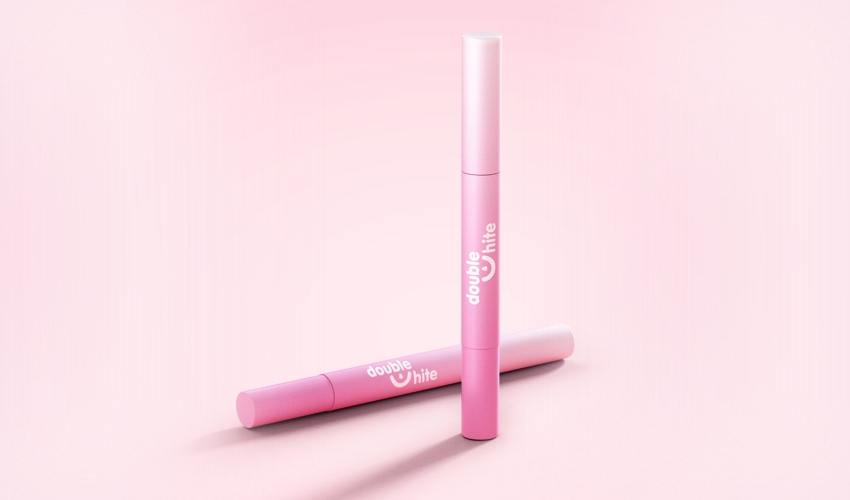
- Teeth Whitening Pens — convenient, portable products for spot treatment and cross-sell.
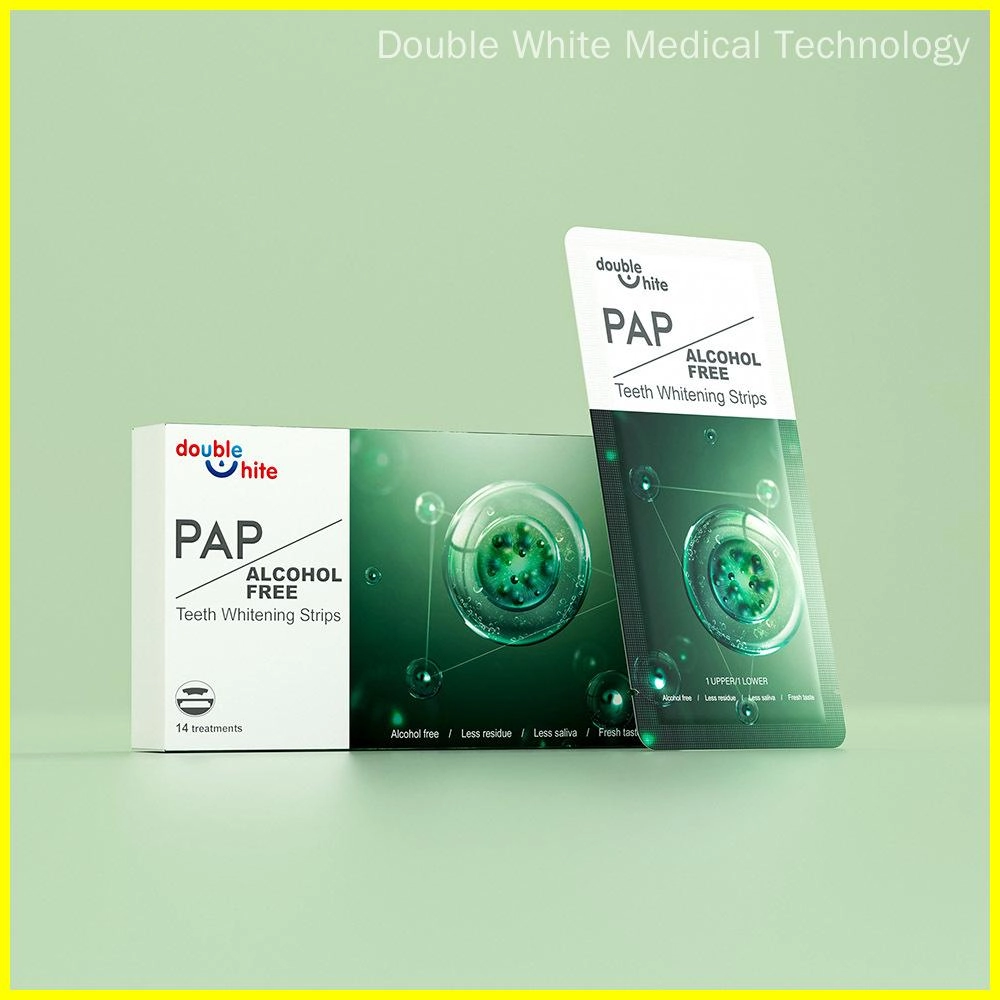
- Teeth Whitening Strips — the primary SKU for many mass and High Quality brands; scalable and easy to package for retail.
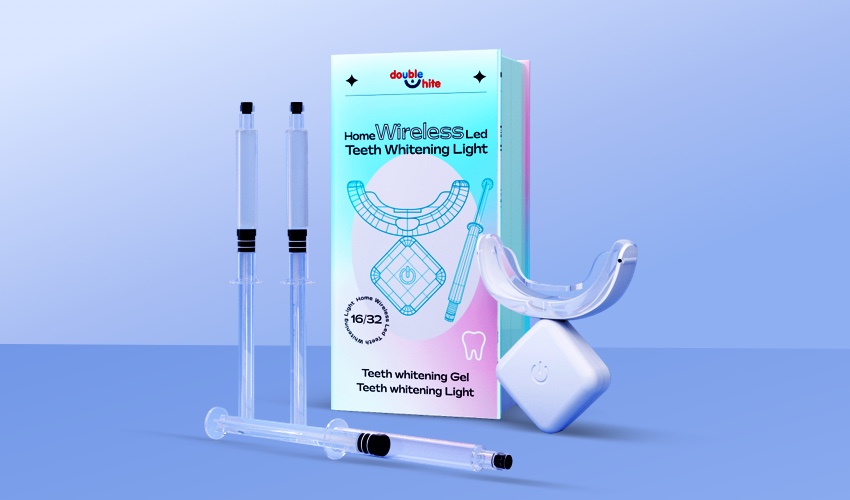
- Teeth Whitening Kits — bundled solutions (strips + gel/pen + shade guides) that drive higher AOV and perceived value.
Double White’s vision is to become the world's leading teeth whitening strips manufacturer. The company’s combination of R&D, production, and brand management helps clients lower COGS, accelerate compliance, and optimize packaging for retail or DTC channels. Learn more at https://www.double-white.com/.
Pricing tactics to improve profitability quickly
Short-term pricing moves that can improve margins without losing customers:
- Introduce tiered pricing (single pack / value pack / subscription) to capture different willingness to pay.
- Use bundled upsells (strips + pen) to increase AOV and amortize shipping.
- Test price elasticity with controlled A/B tests across audiences and channels.
- Offer auto-replenishment discounts to lock in lifetime value and reduce CAC per reorder.
- Negotiate Minimum Order Quantities (MOQs) and tiered pricing with your supplier to reduce per-unit COGS.
Common pricing mistakes to avoid in the teeth whitening strips business
Avoid these pitfalls that can erode profit or brand equity:
- Underestimating returns, refunds, and product returns processing cost.
- Ignoring regulatory and testing costs in new markets.
- Competing only on price in saturated marketplaces like Amazon.
- Failing to account for retailer slotting fees or promotional allowance commitments.
Frequently Asked Questions (FAQ)
Q: How much should I price a single pack of whitening strips?
A: Pricing depends on channel and positioning. For DTC, many brands price single packs between $9–$25 depending on formula strength and branding. For retail, suggested retail prices tend to be higher to accommodate retailer margins. Use your unit economics to ensure any price covers COGS, channel fees, and marketing plus desired profit.
Q: Should I sell on Amazon or focus on DTC?
A: Both channels can be valuable. Amazon gives scale and discovery but compresses margins due to fees and competition. DTC gives higher margin and customer data but needs larger upfront marketing investment. A hybrid strategy often works best: use DTC for branding and subscription funnels, and marketplaces for volume.
Q: How do I reduce per-unit costs quickly?
A: Increase order quantities to access supplier tier pricing, simplify packaging, shift freight from air to sea where feasible, and consolidate SKUs. Partnering with an experienced OEM/ODM (like Double White) can also reduce R&D and manufacturing overheads.
Q: What regulatory approvals do whitening strips need?
A: Requirements vary by market. In many countries whitening strips are treated as cosmetics or oral-care products, requiring safety and stability testing and accurate labeling. Markets like the EU and the U.S. have specific ingredient limits. Consult local regulations and budget for testing and professional regulatory support.
Q: How much should I budget for marketing per unit?
A: Early-stage brands often see CAC between $5 and $25+ per unit depending on channel, creative quality, and competition. Aim to model CAC against lifetime value (LTV) — subscription or repeat purchase behavior improves this math substantially.
Contact & Next steps
If you’re building a teeth whitening strips business and want manufacturing, R&D, or custom packaging support, Double White provides free samples, OEM/ODM services, and can help model unit economics based on your forecast. Visit https://www.double-white.com/ to request samples or contact sales for customization and pricing consultation.
References
- Grand View Research — reports on oral care / teeth whitening market trends (industry overview and growth drivers)
- Statista — market data and retail channel fee benchmarks for personal care and cosmetics
- U.S. Food and Drug Administration (FDA) — cosmetic and oral care regulatory guidance
- Industry packaging reports (Smithers, PMMI) — packaging cost and trends in personal care
- Amazon Seller Central — fee structures and marketplace selling guidelines (fee and FBA policies)
Recommended for you
Do PAP Whitening Strips Work? Discover Effective Oral Care Solutions at Double White
Advanced Guide to Teeth Whitening and Enamel Care - Double White
The Ultimate Guide to Charcoal Teeth Whitening Strips: A Complete Overview and Complete Buying Guide
Does Saliva Ruin Teeth Whitening Strips? | Double White
About Solution Suggestions
what's the best teeth whitening method?
The best teeth whitening method depends on your goals and sensitivities. Here's a rundown of some popular options:
-
In-office laser whitening: This is the most effective method, providing dramatic results in a single appointment. However, it's also the most expensive option.
-
At-home whitening strips: These are a convenient and affordable option that can whiten your teeth in a few weeks. However, they may not be as effective as in-office whitening, and they can cause some tooth sensitivity.
-
Whitening toothpaste: These toothpastes contain mild abrasives or chemicals that can help remove surface stains. However, they won't whiten your teeth as dramatically as other methods.
Here are some additional things to consider:
- Your teeth sensitivity: If you have sensitive teeth, you may want to choose a whitening method that is specifically designed for sensitive teeth, such as a toothpaste with a low concentration of peroxide.
- The severity of your stains: If you have only mild staining, you may be able to achieve good results with an at-home whitening method. However, if you have severe staining, you may need to see a dentist for professional whitening.
It's always best to talk to your dentist before starting any teeth whitening treatment. They can help you choose the right method for your needs and ensure that it's safe for your teeth.
What payment methods are available?
We accept a variety of payment methods, including bank transfer, credit card payment, PayPal, etc.
About Product Choice
Should I choose patches or pens for teeth whitening?
If you want to evenly cover the surface of your teeth with whitening ingredients without affecting your daily activities, you can choose teeth whitening patches. And if you prefer precise control over the use of whitening ingredients and want to perform supplementary whitening at any time, you can choose a teeth whitening pen.
What types of teeth are your products suitable for?
Our products are suitable for most tooth types including regular, yellow and lightly pigmented teeth. However, for severely discolored teeth or special dental conditions, please consult your dentist before making a choice.
What are the differences between the different products?
Different products may have slightly different usage methods, whitening effects, and applicable groups. Please choose according to your needs and preferences.
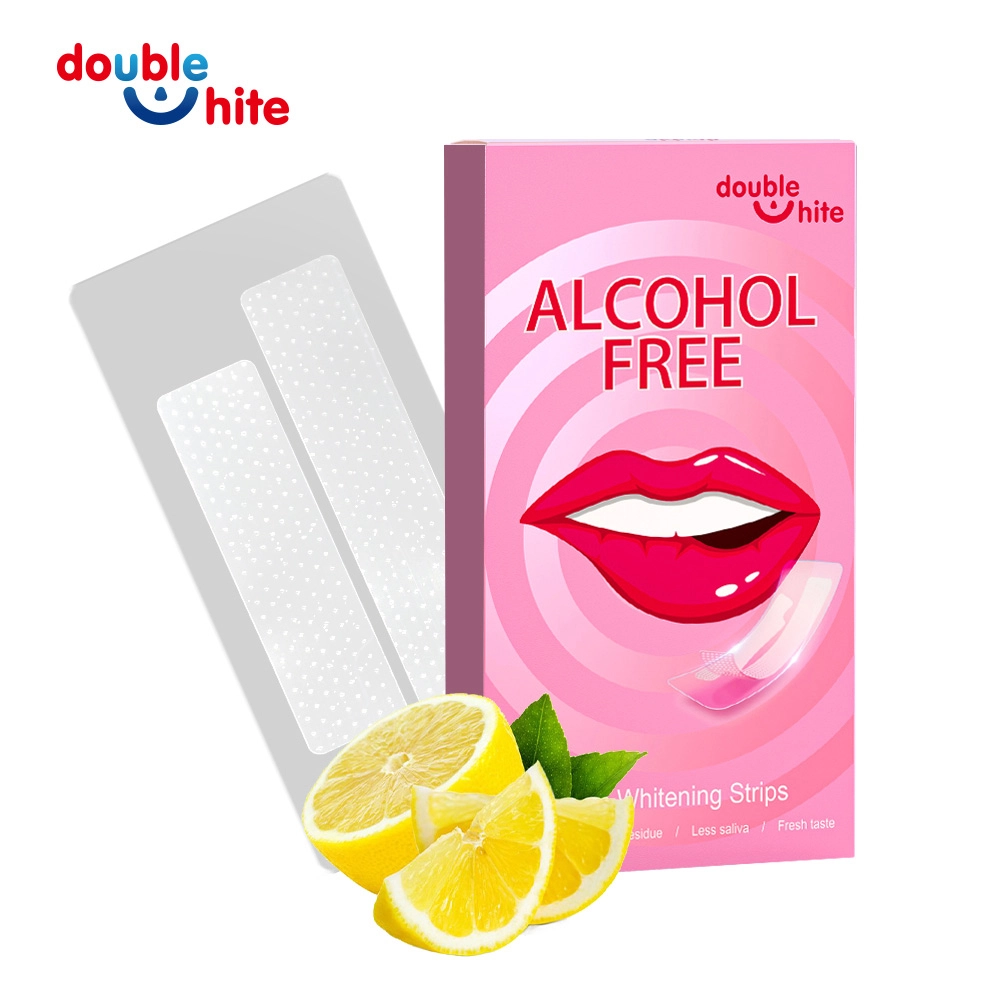
HP Teeth Whitening Alcohol-free Strips HPNA-01
Discover Double White’s HP Teeth Whitening Alcohol-free Strips HPNA-01, the best teeth whitening strips designed for a brighter smile without irritation. Alcohol-free formula ensures gentle yet effective whitening. Achieve professional results safely and easily at home with these top-rated teeth whitening strips.
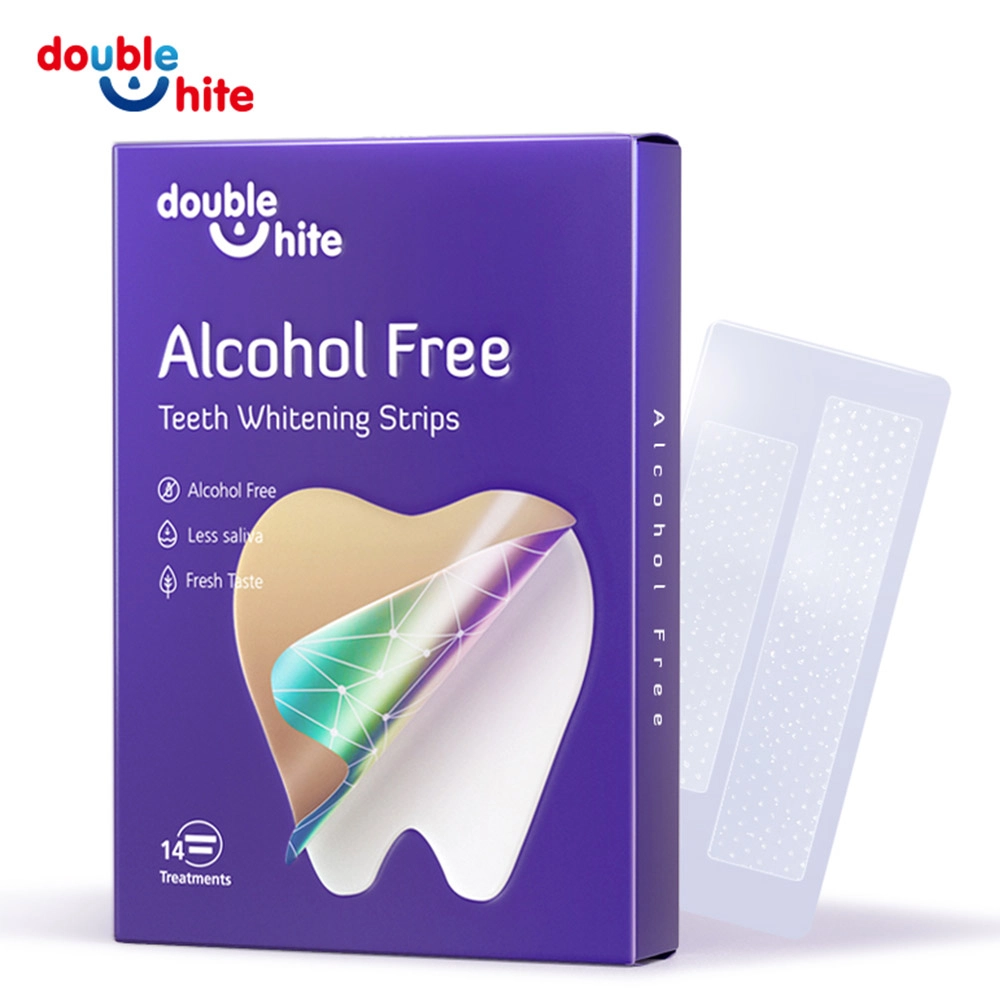
HP Teeth Whitening Alcohol-free Strips HPNA-02
Double White’s HP Teeth Whitening Alcohol-free Strips HPNA-02 offer effective, gentle whitening without alcohol. These best whitening teeth strips deliver visible results, making them the good teeth whitening strips choice for a brighter smile. Try our whitening strips for teeth today!
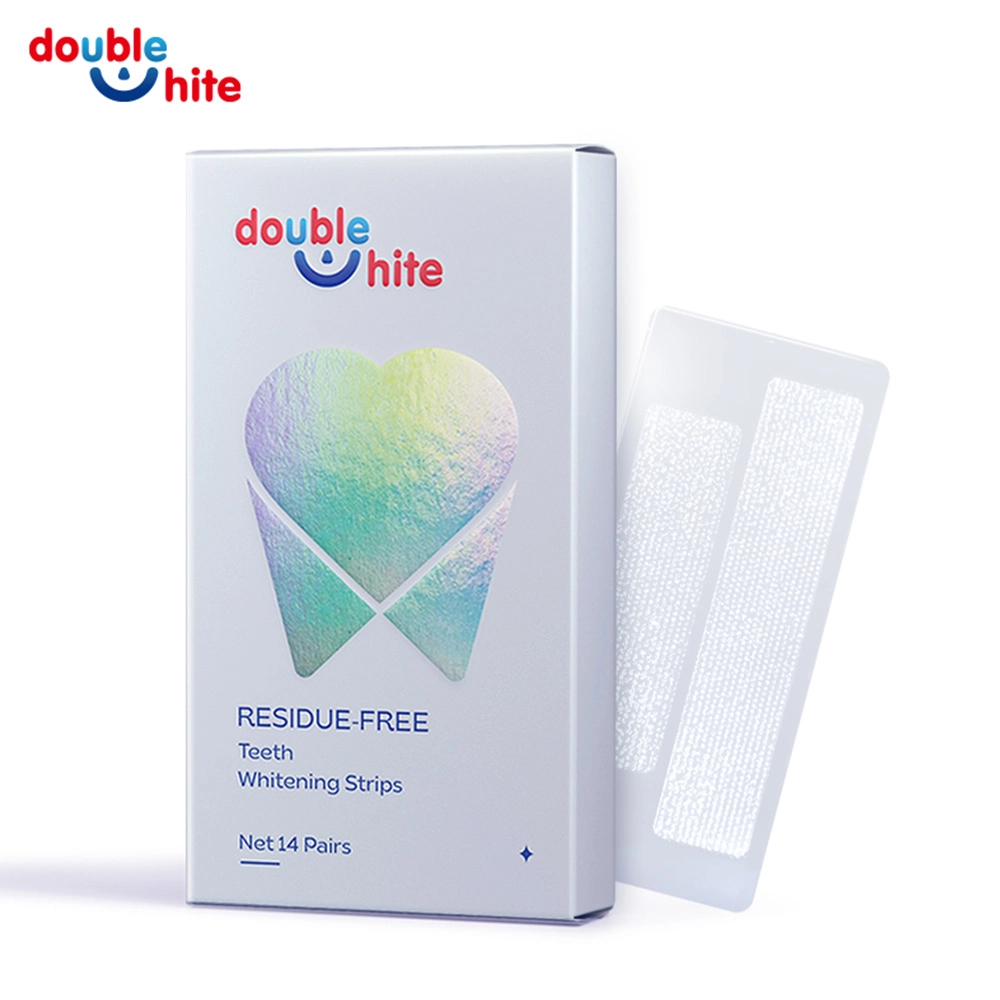
Hydrogen Peroxide Residue Free Teeth Whitening Strips RFHP01
Double White Hydrogen Peroxide Residue Free Teeth Whitening Strips RFHP01 deliver the best quick teeth whitening results without residue. These best teeth whitening strips offer safe, effective brightening for a confident smile. Experience one of the best teeth whitening products today.
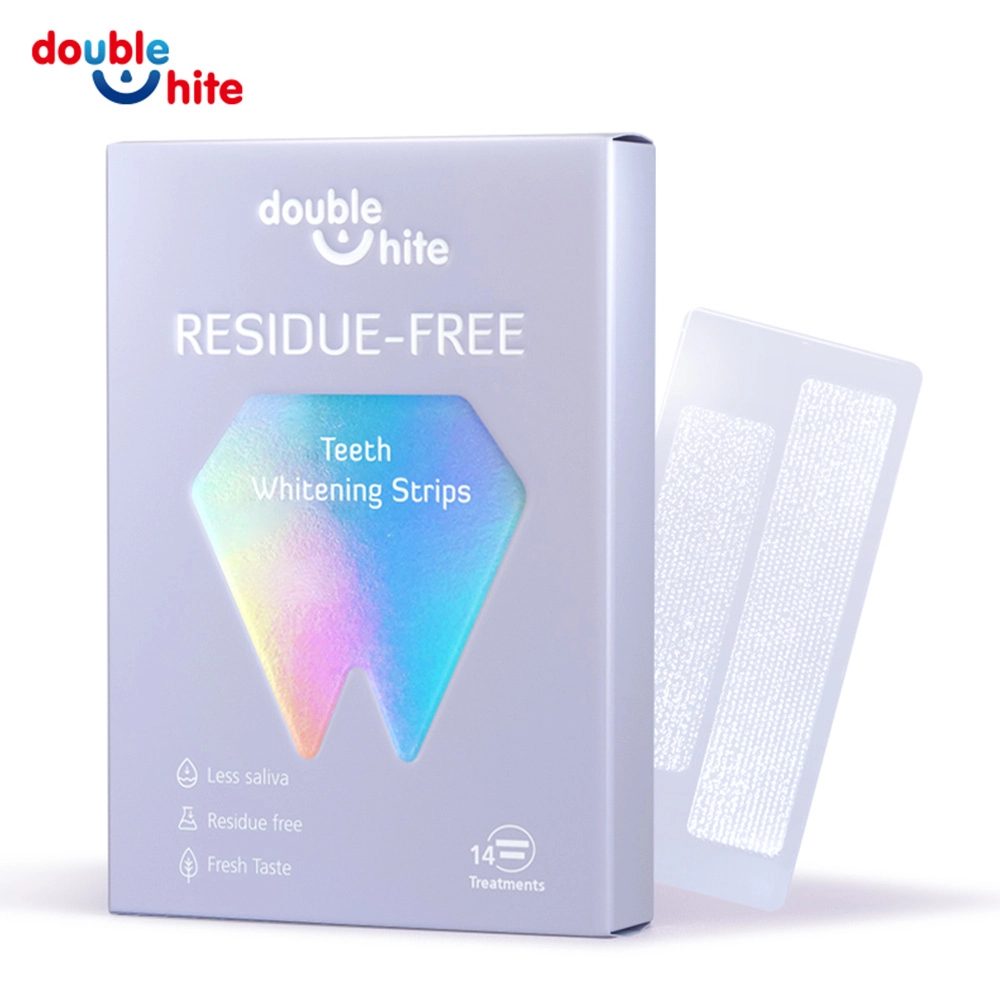
Hydrogen Peroxide Residue Free Teeth Whitening Strips RFHP02
100% tooth surface residue-free teeth strips represents the latest white teeth technology. This new product has strong adhesion on the teeth, but when peeled off, no gel-like substance remains on the tooth surface, leaving the teeth bright. Like new, no cleaning required.
Send us your inquiry
Reach out to us through the form below or via the contact information provided.
Our dedicated team is committed to providing prompt and personalized responses to all your queries.
Please fill out the fields above with your full name, email address, and comment.


Copyright © 2025 Double White All Rights Reserved. Designed by gooeyun
Whatsapp: +8615920313473
cndoublewhite
Doublewhite
doublewhitecn
cndoublewhite
cndoublewhite