





How to Evaluate Teeth Whitening Strips for Private Label Production

Tuesday, December 17, 2024

Whitening strip performance is decided long before a customer opens the box. The effectiveness of a whitening strip formula depends on the active system used, how it's dosed and timed, how the strip is engineered to hold contact with enamel, how the formula holds up in storage, how sensitivity risk is managed, and whether any of this has actually been validated. For a brand owner sourcing from a contract manufacturer, evaluating these variables — rather than a single headline percentage — is what separates a formula that performs consistently from one that reads well on a spec sheet but underdelivers, or performs inconsistently, batch to batch.

This guide walks through each variable and the questions a private label buyer should ask a manufacturer before committing to a formula.

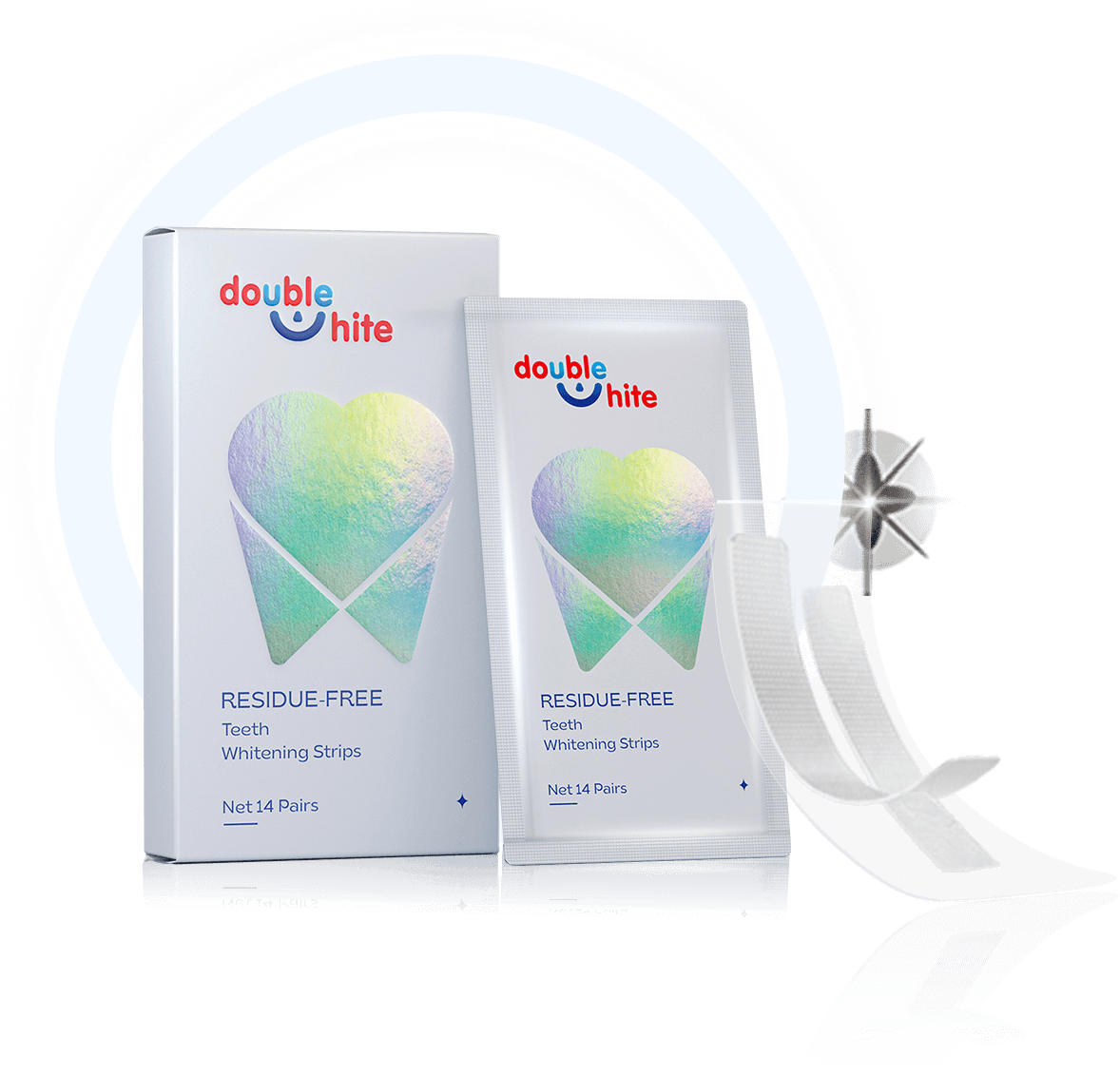
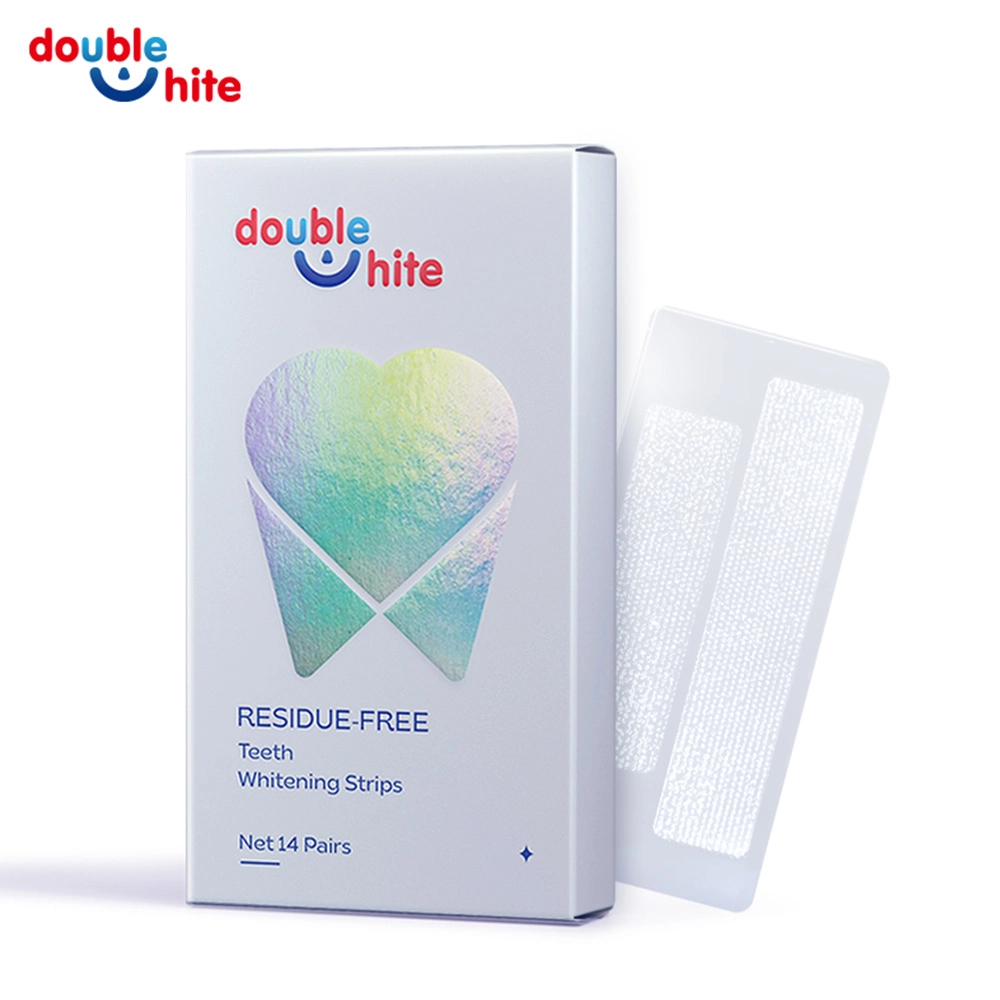
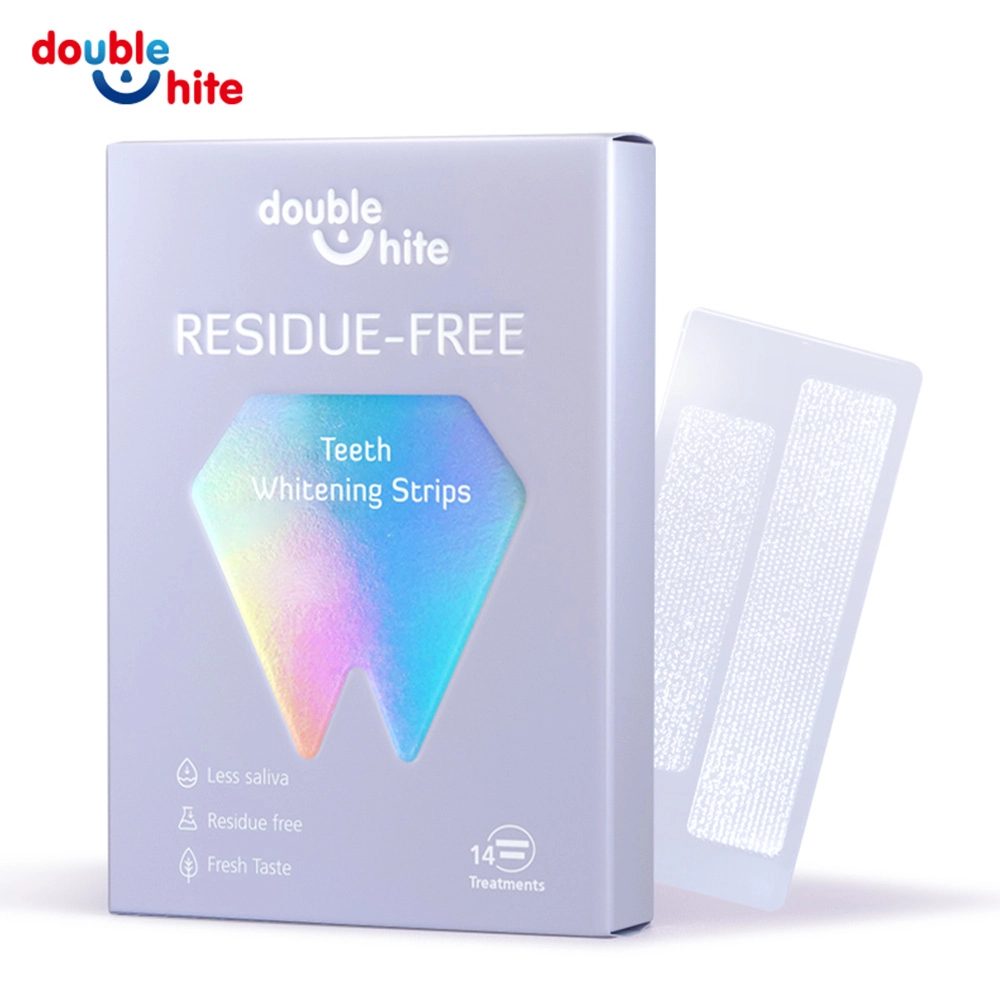
Double White Residue-Free Teeth Whitening Strips are an easy and convenient way to whiten your teeth. The strips are made with a unique formula that helps to remove stains and whiten teeth without causing any sensitivity.


What Determines Whitening Strip Effectiveness?

A whitening strip is a delivery system, not just a chemical. Effectiveness depends on how much active ingredient reaches the enamel surface, how long it stays in contact, and how consistently the finished formula performs across a full production run — not only on the concentration stated on a spec sheet. A formula with strong actives but poor adhesion, an unstable gel matrix, or unreliable batch-to-batch quality can underperform a more modest formula that was engineered and validated as a complete system.

Active Routes: HP, CP, PAP, and Sodium Chlorite

Among peroxide-based whitening systems, hydrogen peroxide (HP) and carbamide peroxide (CP) are the two most established active routes. HP acts directly; CP breaks down gradually into hydrogen peroxide once in contact with saliva and enamel, so a CP formula releases its active peroxide more slowly over the wear period than an HP formula at the same labeled percentage.

Peroxide-free strips use different chemistry entirely and should be evaluated on their own terms:

  • PAP (Phthalimidoperoxycaproic acid) is an alternative oxidative whitening route, marketed as peroxide-free. Its performance and safety profile depends on its own concentration, pH, and formulation — it should not be benchmarked against HP/CP percentages as if they were interchangeable.
  • Sodium chlorite strips rely on a different oxidation mechanism and require their own evaluation of concentration, pH, stability, and use conditions; sodium chlorite chemistry behaves differently in storage and in the mouth than either peroxide route.


The practical takeaway for buyers: different active routes cannot be compared on percentage alone. A formula evaluation request should specify which active system is being assessed, since the relevant test methods, stability behavior, and claim substantiation differ by route.

Concentration and Regulatory Context

Regulatory limits vary by market and directly shape what a formula can be sold as, where.

In the European Union, tooth-whitening products containing or releasing up to 0.1% hydrogen peroxide may be supplied directly to consumers. Products containing or releasing more than 0.1% and up to 6% are restricted to dental-professional channels, with first use performed by, or under the direct supervision of, a dental practitioner.

In the United States, there is no single federal peroxide concentration limit applied uniformly to every OTC whitening product. Brands are instead required to substantiate product safety, efficacy, and labeling claims. Review programs such as the ADA Seal of Acceptance evaluate the finished product against its supporting laboratory and clinical evidence — including active ingredient measurement, enamel surface microhardness, erosion testing, and clinical data — rather than certifying products against one standard concentration.

Buyers should request the actual active ingredient percentage for the specific active route in use, and confirm which regulatory framework applies to the intended sales market, rather than assuming one concentration threshold applies globally.

Contact Time Is Formula-Specific, Not a Fixed Standard

Commercial whitening-strip protocols vary widely across the market — published and commercial products span a wide range of active concentrations and wear regimens, and there is no single wear-time standard that applies to every formula. The correct wear time has to be established for the specific finished formula, active concentration, gel loading, and strip design — it isn't a fixed industry number that can be assumed from the active percentage alone.

The core principle for evaluation is: concentration and wear time must be assessed together, as they were validated together by the manufacturer — not treated as independently interchangeable variables.

Strip Adhesion and Film Substrate

The polymer film that carries the whitening gel determines how evenly the active ingredient stays in contact with enamel. Key factors include:

  • Substrate flexibility — the film needs to conform to the arch and interproximal spaces without gapping, since gaps create uneven whitening.
  • Gel viscosity and tack — gel that's too thin can migrate off the tooth surface; gel that's too thick may fail to reach contact areas.
  • Edge and seal design — poor edge control or excessive gel migration can increase soft-tissue contact and may contribute to gingival irritation, though irritation is a multi-factor outcome and edge design is one contributing variable among several (see Sensitivity Risk Management below).

A manufacturer should be able to provide adhesion or wear-retention test data — not just a qualitative description of the film — on request.

Formula Stability: Broader Than Shelf-Life Percentage

Hydrogen peroxide and other oxidative actives degrade over time, particularly with heat, light, and moisture exposure. Accelerated stability testing may use elevated temperature and humidity conditions — such as 40°C/75% relative humidity — but the specific protocol should be justified for the product, its packaging, and its target market, and supported by real-time stability data rather than accelerated data alone.

A complete stability evaluation covers more than remaining active concentration over time. Buyers should also ask about:

  • Active ingredient concentration at defined intervals against real-time and accelerated data
  • pH stability over the shelf-life period
  • Gel viscosity consistency
  • Film-gel delamination or separation risk
  • Pouch/blister seal integrity
  • Odor, color, and taste change
  • Microbial quality
  • Packaging material compatibility with the formula

Request a stability data package covering these points for the actual finished packaging configuration — not a stated shelf-life claim alone.

Sensitivity Risk Management

Tooth sensitivity and gum irritation are among the most commonly reported, generally temporary effects of tooth-whitening products, influenced by concentration, contact time, use frequency, individual tooth condition, and the complete formula — not any single variable in isolation. Formulas designed to reduce sensitivity risk may include:

  • Potassium nitrate, which is commonly used to reduce nerve excitability in dentinal tubules.
  • Amorphous calcium phosphate (ACP) or fluoride, used to support enamel remineralization during and after the whitening cycle.
  • pH buffering, since formula pH can affect enamel demineralization risk.


Desensitizing ingredients may support a sensitivity-conscious formula, but their inclusion does not on its own justify claims such as "zero sensitivity" or "no irritation" unless the finished product has clinical or consumer evidence to support that specific claim.

Testing and Validation Methods

A formula claim is only as credible as the testing behind it. When evaluating a manufacturer, ask which of the following they can produce:

  1. In vitro shade testing — enamel samples measured with a spectrophotometer (ΔE shade change) before and after a simulated wear protocol, giving objective, repeatable efficacy data.
  2. Finished-product potency testing — a validated assay (an appropriate titration, chromatographic method, or another method validated for the specific active) confirming that each released batch meets its approved concentration specification. The method should be matched to the active in use; a validated method with a defined acceptance range and batch traceability matters more than which specific instrument is used.
  3. Stability testing — as outlined above, run on the actual finished packaging.
  4. Consumer or clinical panel testing — shade change and sensitivity self-reporting over the full use protocol, ideally with a defined sample size and standardized before/after documentation.


A manufacturer with in vitro and finished-product potency data available is a materially stronger sourcing partner than one relying only on raw-material certificates or marketing claims.

Batch-to-Batch Consistency

A sample formula that performs well in evaluation does not guarantee that every production batch will perform the same way. This is one of the most overlooked evaluation steps for private label buyers, and one of the most common sources of post-launch complaints when it's skipped. Batch consistency checkpoints to request from a manufacturer include:

  • Gel loading per strip
  • Active concentration release range (acceptance tolerance, not a single target number)
  • Strip dimensions and film thickness
  • Gel coating uniformity across the strip
  • Individual pouch seal strength
  • Net weight tolerance
  • Batch coding and traceability
  • Certificate of Analysis (COA) per batch
  • Retained samples policy
  • Change-control procedure for any formula, supplier, or process modification

A manufacturer that can walk through these checkpoints — and provide a COA per batch as standard practice — is set up for consistent production, not just a strong sample.

Formula Claims and Evidence

Marketing claims should be tied to the specific evidence that supports them. This mapping is worth confirming with a manufacturer before finalizing packaging copy:

Claim direction Evidence that should support it
Helps whiten teeth Finished-product shade-change (ΔE) or clinical testing
Visible results in X days Testing across the full labeled use cycle
Removes X years of stains Targeted finished-product clinical data
Low sensitivity Consumer or clinical sensitivity evaluation
Enamel safe Microhardness, erosion, and finished-product safety testing
Maintains potency for X months Real-time and accelerated stability data
Strong adhesion / stays in place Simulated or in-use wear-retention testing

Any claim without a corresponding evidence type on hand is a labeling risk for the brand, not just a manufacturing detail — the brand carries the regulatory and reputational exposure, not the factory.

Formulation Evaluation Checklist for Private Label and OEM Buyers

Before tooling or packaging decisions, request the following from a manufacturer:

  • Confirmed active route (HP, CP, PAP, sodium chlorite, or other) and finished-product concentration
  • Wear time and duration protocol specific to that formula, with supporting rationale
  • Film substrate and adhesion/wear-retention test data
  • Full stability data package for the intended shelf life and packaging format
  • Desensitizing agent inclusion and rate, if applicable
  • Available in vitro shade-change and finished-product potency test reports
  • Batch-to-batch consistency data and COA practices
  • Regulatory compliance mapping to the target sales market
  • Evidence on file for each intended marketing claim


Sourcing a whitening strip formula for private label production means evaluating the complete system — active route, dosing, delivery, stability, and batch consistency — and confirming the evidence behind any claim the brand intends to make. Buyers who request this documentation upfront, across HP, CP, PAP, or sodium chlorite formats, avoid the most common cause of underperforming private label launches: a formula that reads well on a spec sheet but wasn't engineered, or validated, as a complete system.


FAQ

Are hydrogen peroxide and carbamide peroxide the only active ingredients used in whitening strips?

No. HP and CP are the two most established peroxide-based routes, but peroxide-free formats such as PAP and sodium chlorite strips use different chemistry and require their own separate evaluation of concentration, pH, and stability rather than a direct percentage comparison to peroxide-based products.

How long should a whitening strip stay on the teeth to be effective?

There isn't a single wear-time standard across the market — commercial protocols vary by concentration, gel loading, and strip design. The correct wear time should be established and validated for the specific finished formula rather than assumed from the active percentage alone.

Why can whitening strips lose effectiveness in storage?

Oxidative actives like peroxide degrade with heat, light, and moisture exposure. Stability depends on more than the base formula — pH stability, gel viscosity, film-gel integrity, and packaging barrier performance all affect how much active concentration remains at the point of use.

What causes gum irritation from whitening strips?

Irritation can result from several contributing factors, including excessive gel loading, strip misplacement, poor edge control, prolonged exposure, or individual sensitivity to the finished formula — it isn't attributable to a single cause.

What testing should a manufacturer provide to validate a whitening strip formula?

In vitro shade-change testing, a validated finished-product potency assay with batch traceability, and stability data on the actual packaging configuration are core documentation a manufacturer should be able to produce, along with batch consistency records such as a per-batch Certificate of Analysis.

Is a higher active concentration always a more effective formula?

Not necessarily, and it isn't directly comparable across active routes. Concentration only translates into results if contact time, adhesion, formula stability, and batch consistency are engineered and validated to match it.

Tags
teeth whitening strips manufacturers
whitening kits for teeth
custom teeth whitening strips Portugal
b2b teeth whitening supplies in Las Vegas
best led light teeth whitening kit
FDA compliant teeth whitening suppliers
Recommended for you
A box of Double White Hydrogen Peroxide Teeth Whitening Pen. - Double White

How to Choose Safe Teeth Whitening Products for Your Brand

How to Choose Safe Teeth Whitening Products for Your Brand
Comparison guide for private label teeth whitening strips, gel pens, and LED kits. - Double White

Teeth Whitening Strips vs Gel Pens vs LED Kits: Product Line Planning Guide for Private Label Brands

Teeth Whitening Strips vs Gel Pens vs LED Kits: Product Line Planning Guide for Private Label Brands
can whitening strips damage your teeth - Double White

OEM vs ODM Teeth Whitening: A Decision Framework for Brand Owners

OEM vs ODM Teeth Whitening: A Decision Framework for Brand Owners
Private label teeth whitening guide: cost, MOQ, and timeline breakdown. - Double White

How Much Does Private Label Teeth Whitening Cost? MOQ & Timeline Guide

How Much Does Private Label Teeth Whitening Cost? MOQ & Timeline Guide
69bcb69ee4785 - Double White

Peroxide-Free Alternatives: The Best Whitening Ingredients (Featuring PAP+) for 2026

Peroxide-Free Alternatives: The Best Whitening Ingredients (Featuring PAP+) for 2026
Teeth whitening product range with marketing dashboard on laptop and strategies in notebook. - Double White

5 Marketing Strategies for Your Private Label Teeth Whitening Brand

5 Marketing Strategies for Your Private Label Teeth Whitening Brand
You may also like
teeth whitening strips hurt teeth - Double White

Alcohol-Free Hydrogen Peroxide Teeth Whitening Strips HPNA-01

Alcohol-Free HP Teeth Whitening Strips HPNA-01 are hydrogen peroxide whitening strips designed for brands, wholesalers, salons, clinics, and e-commerce sellers seeking gentle whitening products with private label customization. Double White supports custom flavor, packaging, logo, formula adjustment, low MOQ, and bulk production for global oral care businesses.

Alcohol-Free Hydrogen Peroxide Teeth Whitening Strips HPNA-01
A box of Double White teeth whitening strips. The box is white with a blue and pink gradient tooth on the front. The text on the box is "double white", "residue-free", "teeth whitening strips", and "net 14 pairs". - Double White

Hydrogen Peroxide Residue-Free Teeth Whitening Strips RFHP01

Hydrogen Peroxide Residue-Free Teeth Whitening Strips RFHP01 are designed for private label brands, wholesalers, salons, clinics, and e-commerce sellers seeking whitening strips with strong adhesion, clean removal, and low-residue user experience. Double White supports custom flavor, private label packaging, logo printing, sample support, and bulk production for global oral care businesses.

Hydrogen Peroxide Residue-Free Teeth Whitening Strips RFHP01
Double White Residue-Free Teeth Whitening Strips. 14 treatments. Less saliva, residue-free, fresh taste. - Double White

Hydrogen Peroxide Residue-Free Teeth Whitening Strips RFHP02

RFHP02 Hydrogen Peroxide Residue-Free Teeth Whitening Strips are designed for private label brands, wholesalers, salons, clinics, and e-commerce sellers looking for whitening strips with strong adhesion, clean removal, and a low-residue user experience. Double White supports custom flavor, private label packaging, logo printing, sample support, and bulk production for global oral care businesses.

Hydrogen Peroxide Residue-Free Teeth Whitening Strips RFHP02
professional teeth whitening supplies - Double White

Hydrogen Peroxide Teeth Whitening Gel Strips for OEM & Private Label Brands

Double White's hydrogen peroxide teeth whitening gel strips are designed for brands, wholesalers, and e-commerce sellers looking for a reliable, cost-effective entry-level whitening strip. With a double elastic gel formula, controlled HP concentration, and private label packaging support, this product is suited for supermarket retail, salon use, and online channel distribution across global markets.


Hydrogen Peroxide Teeth Whitening Gel Strips for OEM & Private Label Brands

Send us your inquiry

Reach out to us through the form below or via the contact information provided.

Our dedicated team is committed to providing prompt and personalized responses to all your queries.

Full Name: must not exceed 100 characters.
Invalid email format or length exceeds 100 characters. Please re-enter.
Please enter a valid phone number!
Please select Business Type:
Company Name must not exceed 100 characters.
Company Address must not exceed 100 characters.
Message / Custom Requirements: must not exceed 3000 characters.

Please fill out the fields above with your full name, email address, and comment.

Contact customer service

Get a quote

×

Hello! Looking for a quote?

Please leave me a message to get the best quote and product information.

Full Name must not exceed 100 characters.
Invalid email format or length exceeds 100 characters. Please re-enter.
Please enter a valid phone number!
Company Name must not exceed 100 characters.
Message / Custom Requirements must not exceed 3000 characters.

Welcome to leave a message

×

Hello! Looking for a quote?

Please leave me a message to get the best quote and product information.

Full Name must not exceed 100 characters.
Invalid email format or length exceeds 100 characters. Please re-enter.
Please enter a valid phone number!
Company Name must not exceed 100 characters.
Message / Custom Requirements must not exceed 3000 characters.

Request a Business Quote

×

⚠️ Business inquiries only.
Please complete the form below so we can better understand your requirements.

Full Name must not exceed 100 characters.
Company Name must not exceed 150 characters.
Please select Business Type
Invalid email format or length exceeds 100 characters. Please re-enter.
Please enter a valid phone number!
Please select Estimated Order Quantity
Message / Custom Requirements must not exceed 3000 characters.