






White Label vs Private Label Teeth Whitening Strips: Which Model Is Right for Your Brand?
Choosing between white label and private label teeth whitening strips depends on how much control your brand needs over formula, packaging, compliance, and product differentiation. This buyer guide explains the key differences and supplier questions to ask.

- Quick Answer: White Label or Private Label Teeth Whitening Strips?
- What Do White Label and Private Label Teeth Whitening Strips Mean?
- How Teeth Whitening Strip Formulas and Formats Affect the Decision
- White Label vs Private Label Teeth Whitening Strips: Key Differences
- Which Model Fits Your Business and Application?
- Prepare Your Supplier Brief: RFQ Checklist
- Common Buying Mistakes and Compliance Risks
- Supplier Selection Criteria
- How to Choose Between White Label and Private Label: A Practical Decision Framework
- Explore the Right Solution for Your Application
- Frequently Asked Questions
- References
Choosing between white label and private label teeth whitening strips depends on how much control your brand needs over formula, packaging, compliance documentation, and product positioning. White label is generally suitable for buyers testing a market with an existing product platform and limited customization. Private label is better when differentiation, formula selection, packaging control, and long-term brand positioning are central to your launch strategy.
Quick Answer: White Label or Private Label Teeth Whitening Strips?
The short answer
White label teeth whitening strips use an existing product platform with limited branding or packaging changes. Private label teeth whitening strips typically involve greater control over formula selection, strip format, packaging design, and product positioning, but require more supplier coordination and approval stages.
For more context on this related topic, see private label packaging customization.
The best choice depends on your target market, product requirements, compliance needs, differentiation strategy, and expected order volume. Buyers should choose based on these factors rather than assuming one model is always cheaper or faster.
For a comprehensive overview of the customized route, review this guide to private label teeth whitening strips before preparing a supplier brief.
When each model is usually suitable
| White Label | Private Label |
|---|---|
| Suitable when an existing formula and format already fit your target market and you mainly need brand identification or limited packaging changes. | Suitable when you need distinct packaging, a specific formula, a particular strip format, a care-focused range, or a planned product family. |
| Reduces development decisions and is often easier to scope for an initial market test. | Requires more approvals and supplier coordination, but gives your brand greater control over product positioning and long-term portfolio planning. |
What Do White Label and Private Label Teeth Whitening Strips Mean?
White label teeth whitening strips explained
In a white label arrangement, the supplier has already developed the core product platform. You select from available formula and format options, then apply your own branding through packaging or labeling. The underlying strip specification typically remains standard even when the outer artwork changes.
This approach is practical for startups, distributors, or online sellers that want to validate demand without managing extensive formula decisions. However, you must still confirm the actual formula, active content, strip construction, packaging language, claims, and available documentation rather than assuming all white label products are identical.
Private label teeth whitening strips explained
Private label describes a more customized brand-development model. Depending on the supplier, customization may include selecting or adapting the active formulation, choosing wet, dry, dissolvable, no-residue, alcohol-free, polymer-reduced, or U-shaped formats, developing packaging, and aligning the product with a specific market position.
Private label does not automatically mean every component is newly formulated. A supplier may use an established base formula while customizing the packaging, format, or product combination. The quotation and product specification should clearly state which elements are standard and which are customized.
Where the terms can overlap
Manufacturers do not always use "white label," "OEM," and "ODM" in the same way. One supplier may call a branded standard product private label, while another reserves private label for formula and packaging development. For this reason, define ownership and customization in writing.
Ask whether the quotation covers only artwork and packaging, or also includes formula selection, product-format changes, testing, claims review, documentation, and sample approval. Review a guide for choosing a private label teeth whitening strips manufacturer alongside the supplier's own specification documents.
How Teeth Whitening Strip Formulas and Formats Affect the Decision
Hydrogen peroxide, sodium chlorite, and PAP options
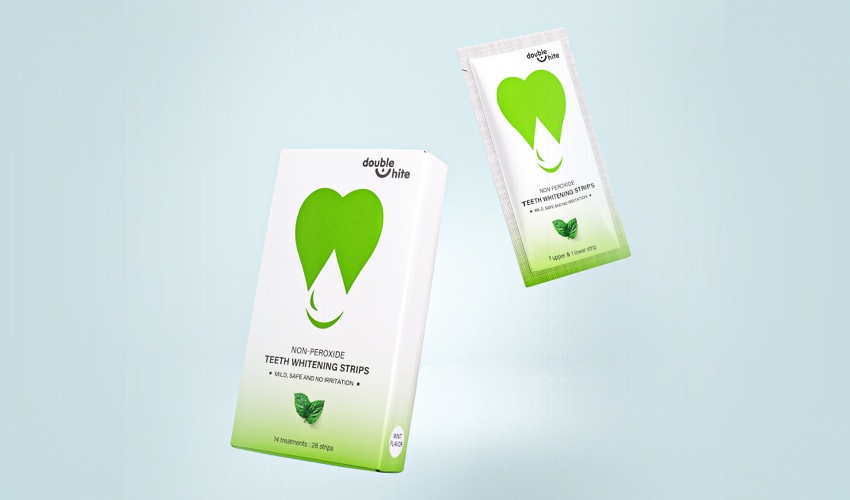
Hydrogen peroxide, sodium chlorite, and PAP are different formulation pathways used in whitening strips. These systems use oxidation-related chemistry to act on certain tooth stains, but the permitted formulation, concentration, labeling, and claims depend on the destination market and product classification. Market-specific regulatory confirmation is required before final formula selection.
Hydrogen peroxide is commonly evaluated for North American formulations, while sodium chlorite and PAP options may be suitable where non-hydrogen-peroxide positioning or different regulatory conditions apply. For North American sales, review applicable ingredient and labeling obligations through the U.S. Food and Drug Administration (FDA) - Cosmetic Products Guidance & Regulation.
When comparing formulas, confirm ingredient identity, concentration, intended use, supporting documentation, warning language, and permitted claims. A separate comparison of PAP vs hydrogen peroxide private label whitening strips can help narrow the technical discussion before packaging artwork begins.
Wet, dry, dissolvable, and no-residue formats
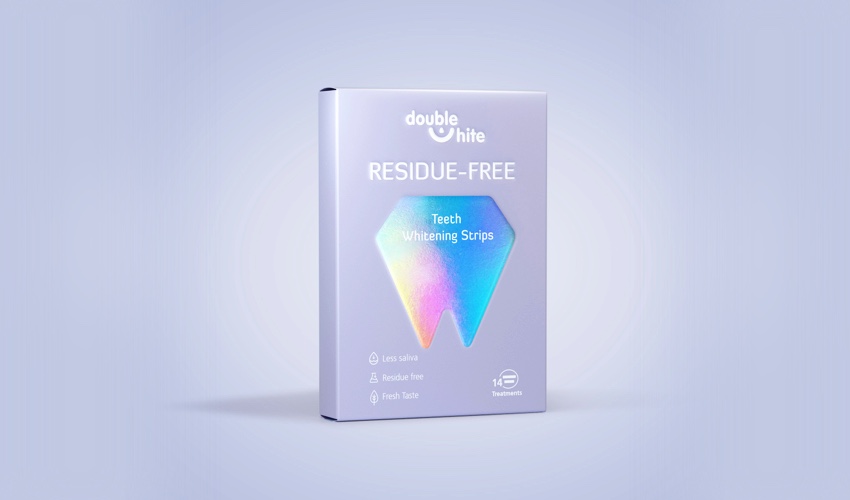
Format changes the consumer experience and the product specification. Wet gel strips may require rinsing and have different adhesion and overflow considerations. Dry gel strips are designed around a drier application experience. No-residue formats focus on reducing remaining material after use, while dissolvable strips are designed to dissolve during wear.
These differences affect film construction, adhesive behavior, wear instructions, packaging protection, storage expectations, and sample approval criteria. Do not approve artwork until the actual strip format and use instructions are confirmed.
Alcohol-free, polymer-reduced, and U-shaped designs
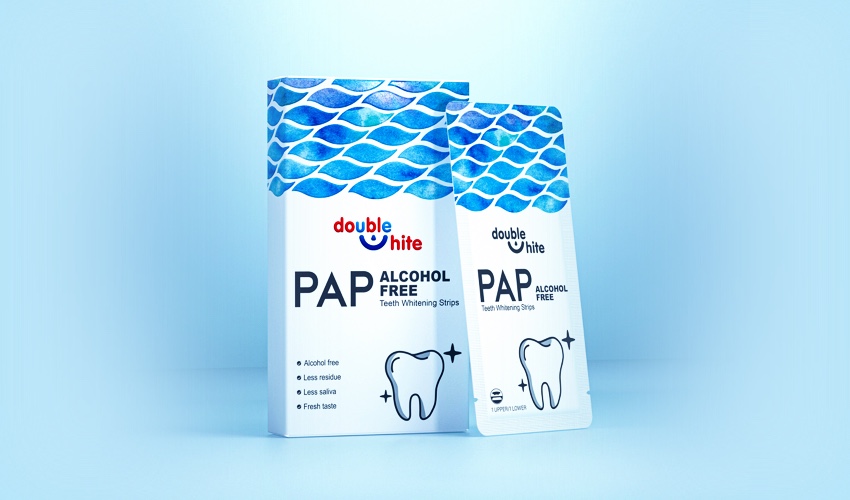
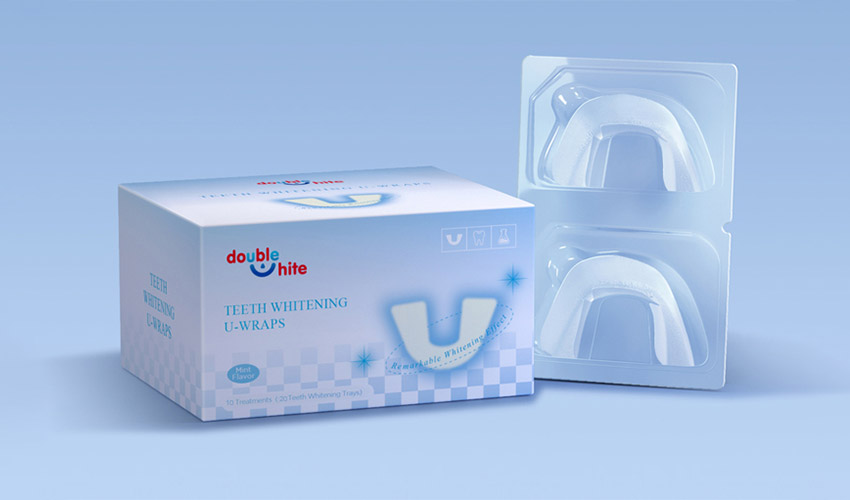
Alcohol-free strips support positioning strategies centered on ingredient preferences or regional consumer requirements. Polymer-reduced or natural-material positioning requires confirming the exact material description rather than relying on broad "natural" wording. U-shaped designs change coverage and fit by wrapping around more of the tooth surface.
These features create meaningful differentiation but add specification questions. Confirm adhesion, dissolution behavior, residue expectations, coverage, storage stability, packaging compatibility, and permitted label wording.
Sensitive-care and non-whitening strip options
Not every oral-care strip should be presented as an automatic substitute for a whitening strip. Remineralization concepts using hydroxyapatite, silicon, calcium, or phosphorus-based active systems serve a different care position from peroxide-based whitening. Hyaluronic-acid gum-protection strips are specialized care concepts and do not contain whitening ingredients.
This distinction matters when building a portfolio. A brand may use whitening strips as its primary product and add remineralization or gum-care strips as complementary products, but the claims, intended use, and product documentation should remain separate.
White Label vs Private Label Teeth Whitening Strips: Key Differences
| Dimension | White Label | Private Label |
|---|---|---|
| Product Readiness | Existing platform; formula and format already defined | Customizable; formula, format, and packaging can be adapted |
| Formula Control | Select from available options; no modification | Select or adapt active system; customize concentration or delivery |
| Packaging Control | Limited; artwork and labeling customization only | Full control; structure, artwork, language, and claims |
| Claims & Documentation | Supplier provides standard documentation; limited customization | Buyer and supplier align on claims; custom documentation may be required |
| Development Workload | Fewer approval points; simpler process | Multiple checkpoints: formula, samples, artwork, label, documentation |
| MOQ Planning | Standard MOQ; typically lower for existing platform | May be higher; depends on customization scope and batch structure |
| Differentiation | Limited to packaging and brand messaging | Strong; formula, format, packaging, and positioning |
| Best-Fit Buyer | Startups, market testers, e-commerce sellers, wholesalers | Established brands, portfolio builders, exclusive channel strategies |
Which Model Fits Your Business and Application?
Startup and market-test brands
A startup may prefer white label when the immediate objective is to test channel response and the available formula already matches the target market. Private label becomes more appropriate when the brand identity depends on a distinct formula story, a specific consumer concern, or packaging that cannot be achieved through standard options.
E-commerce sellers and online brands
Online brands need clear product education because customers cannot examine the strip before purchase. A private label route can support more deliberate communication of formula, wear experience, residue, and use instructions. A white label route can work when you are comfortable using an established product platform and standardized claims.
Wholesalers and distributors
Wholesalers often prioritize repeatable specifications, clear carton information, and predictable replenishment. White label may simplify assortment planning when several customers can use the same platform. Private label is more suitable when you have an exclusive channel strategy or need different packaging for different retail customers.
Salons and training schools
Consider how the product will be explained and used in a professional setting. A branded private label product can support a consistent education program, while white label may be sufficient when the product is an add-on to an existing service rather than the central brand proposition.
Dentists and clinics
Distinguish consumer cosmetic positioning from professional-use expectations. The product's intended use, instructions, claims, documentation, and responsibility for customer guidance should be confirmed before ordering. A customized care or whitening range may be useful, but the clinical channel does not remove the need for market-specific review.
Established brands seeking a differentiated portfolio
Established brands benefit most from private label when they need a family of products with consistent packaging architecture and clearly separated positions. A staged approach can begin with an existing platform, then move to more customized products after validating demand and clarifying portfolio requirements.
Prepare Your Supplier Brief: RFQ Checklist
Before requesting quotes, document the following information and provide it to suppliers. Mark each item as confirmed, optional, or market-dependent so suppliers understand your requirements clearly.
Market and Channel
- Destination countries: Where will the product be sold?
- Sales channel: E-commerce, retail, wholesale, professional, or direct-to-consumer?
- Customer profile: Who is the end user (consumer, professional, clinic)?
- Intended use: Cosmetic whitening, sensitivity care, professional treatment, or other?
- Positioning: What is the primary benefit or differentiator?
Product Specification
- Active system: Hydrogen peroxide, sodium chlorite, PAP, or non-whitening care?
- Concentration: Specific percentage or range?
- Strip format: Wet, dry, dissolvable, no-residue, alcohol-free, polymer-reduced, or U-shaped?
- Wear time: Expected duration and rinsing requirements?
- Pack count: Strips per box or kit?
Packaging and Branding
- Packaging type: Box, pouch, case, or other?
- Artwork versions: Number of different designs or languages?
- Artwork ownership: Who provides or controls the design?
- Languages: Which languages are required on packaging and labeling?
- Barcode and regulatory: Barcode requirements, warning statements, ingredient disclosure format?
Documentation and Claims
- Ingredient information: Full ingredient list and concentrations?
- Safety documentation: MSDS, toxicological assessment, or other safety files?
- Claims support: What documentation supports whitening, sensitivity, natural, vegan, or other claims?
- Market-specific compliance: FDA registration, CE marking, HALAL, VEGAN, or other certifications?
- Technical files: Product specification, manufacturing process, stability data?
Order and Logistics
- MOQ: Minimum order quantity by formula, packaging format, and artwork version?
- Delivery terms: DDP, DDU, or other?
- Packaging and inspection: What is included in the quoted price?
- Sample approval: Timeline and process for sample review and approval?
- Repeat orders: Lead time and minimum quantities for reorders?
Key instruction for suppliers: For each item above, specify whether it is standard (included in white label offering), customized (requires development or modification), buyer-provided (you will supply the asset or specification), supplier-provided (supplier will develop), or market-dependent (requires local regulatory confirmation).
Common Buying Mistakes and Compliance Risks
Choosing a formula before checking the target market
Starting with a preferred active ingredient can create rework if the destination market requires a different product classification, concentration, label, or claim structure. Conduct market-specific regulatory review before final formula selection.
Treating packaging customization as formula customization
A new box, pouch, or artwork file does not necessarily change the strip. Request a written comparison between the standard product and the quoted customized product. Confirm which elements are actually being modified.
Assuming certificates apply to every product or market
Factory-level quality-system evidence and product-level documentation serve different purposes. The International Organization for Standardization (ISO) - Cosmetics Standards provides reference points for manufacturing and quality-management expectations, but you must match documents to the final product and destination market.
Using unsupported whitening or sensitivity claims
Claims should be reviewed against the formula, intended use, market rules, and available support. "Sensitive," "natural," "safe," or "clinically proven" should not appear on artwork unless the responsible parties have confirmed the basis for the wording.
Comparing suppliers only by quoted price
A lower quote may exclude artwork review, documentation, testing, packaging components, inspection, or delivery services. Compare quotations line by line so that different product specifications are not treated as equivalent.
Failing to confirm logistics and after-sales responsibilities
Before ordering, confirm delivery terms, carton information, damage handling, nonconformity procedures, and the contact responsible for specification changes. These details become more important when importing multiple packaging versions or serving several markets.
Supplier Selection Criteria
Product and formulation capability
Confirm that the supplier can discuss formula and format options relevant to your target market, including hydrogen peroxide, sodium chlorite, PAP, dissolvable, alcohol-free, polymer-reduced, and U-shaped formats where available. Ask whether care strips are separate products rather than whitening substitutes.
Customization and specification support
Ask the supplier to identify the boundary between white label, OEM, and ODM work. Confirm who controls the formula specification, artwork, claims review, sample approval, and final change authorization.
Quality systems and documentation
Review available manufacturing quality-system evidence and product documentation. Confirm whether documents apply to the exact formula, packaging configuration, and destination market rather than to the supplier generally.
Manufacturing scale and order planning
Order planning should cover MOQ, packaging versions, batch structure, repeat-order requirements, and whether the supplier can maintain the approved specification at production scale. Suppliers should clearly state MOQ for customized packaging and formulation orders before moving from sample approval to production.
Logistics and fulfillment
Confirm whether the supplier supports the delivery structure required for your business. Some suppliers support DDP and DDU door-to-door delivery; others do not operate overseas warehouses or support dropshipping. That distinction matters for e-commerce sellers deciding whether they need to hold inventory themselves.
Questions to ask before approval
- Which parts of the quoted product are standard and which are customized?
- Does the approved sample use the same formula, film, packaging, and label content as production?
- What documentation is available for the exact product and destination market?
- How are artwork changes, claims, and specification changes approved?
- What MOQ applies to each formula, artwork version, and packaging format?
- Which delivery terms, inspection steps, and after-sales responsibilities are included?
How to Choose Between White Label and Private Label: A Practical Decision Framework
Choose white label when
- An existing formula and strip format already fit your target market.
- Your immediate goal is a simpler market test or focused initial range.
- Brand differentiation can be achieved through approved packaging and communication.
- You want fewer development decisions before the first order.
Choose private label when
- Formula selection is central to your brand position.
- The product requires a specific format, care function, or packaging structure.
- Your brand needs stronger visual and product differentiation.
- You are planning a product portfolio rather than a single test product.
Use a staged or hybrid path when
A staged path can combine a standard product platform with customized packaging first, followed by deeper formula or format development after market feedback. This approach is appropriate only when the supplier clearly defines what can transition from standard to customized and how the approved specifications will be controlled.
Five-question decision framework
| Decision Question | What to Confirm |
|---|---|
| Market | Where will the product be sold, and what labeling or compliance requirements apply? |
| Product | Which active system, strip format, wear experience, and care position are required? |
| Brand | What must be differentiated through packaging, claims, language, and visual identity? |
| Compliance | Which ingredient information, safety documents, claims support, and market-specific files are needed? |
| Purchasing | What order structure, MOQ, delivery term, sample approval process, and repeat-order plan will be used? |
Explore the Right Solution for Your Application
The right sourcing model becomes clearer when the target market, formula preference, strip format, packaging scope, documentation needs, and order plan are reviewed together. Suppliers need this information to provide accurate quotations and to distinguish between white label and private label options on equivalent specifications.
Double White Medical Technology Development (Guangzhou) Co. LTD, operating since 1999, manufactures teeth whitening strips across hydrogen peroxide, sodium chlorite, PAP, and care-focused formats. The company operates a 30,000-square-meter Class 100,000 cleanroom facility with 8 fully automated production lines and supports DDP and DDU delivery for customized packaging and formulation orders with a minimum order quantity of 1,000 boxes. The supplier does not operate overseas warehouses or support dropshipping.
Frequently Asked Questions
References
Purple Violet Teeth Whitening U-Wraps for Private Label & Wholesale
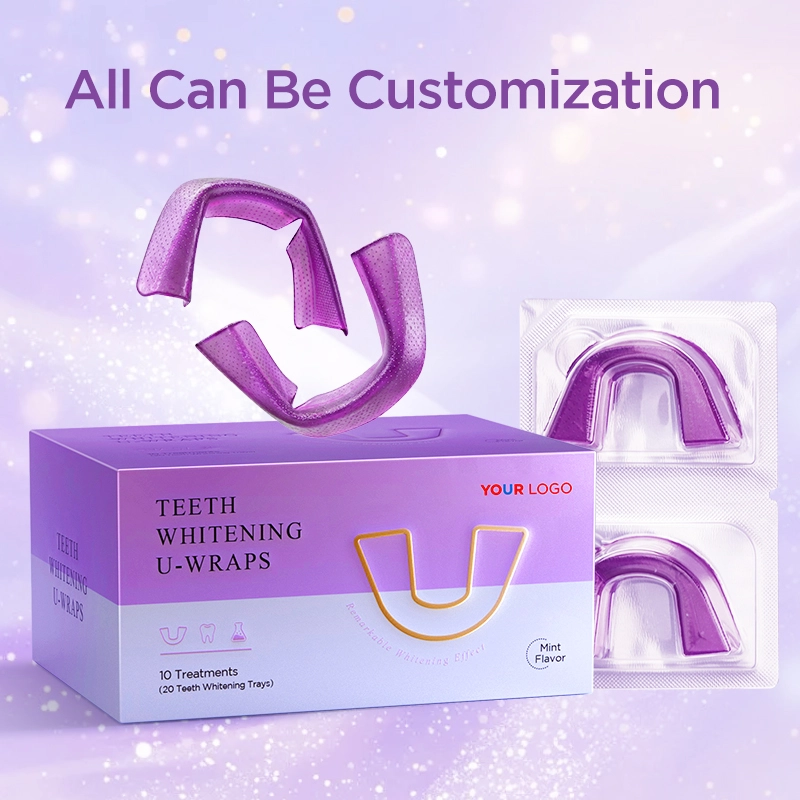
Purple Teeth Whitening U-Wraps: Private Label Sourcing Guide for Brands
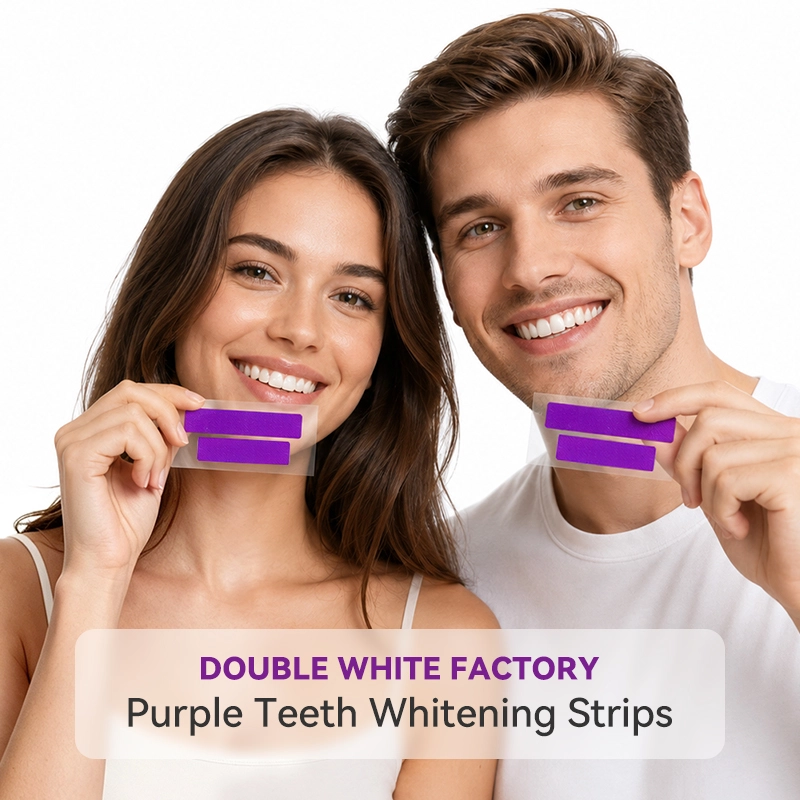
How Do Purple Teeth Whitening Strips Work? A Color-Correction Guide for Private Label Buyers

Whitening Pen Applicator & Dispensing Guide: What Buyers Should Check Before Bulk Production
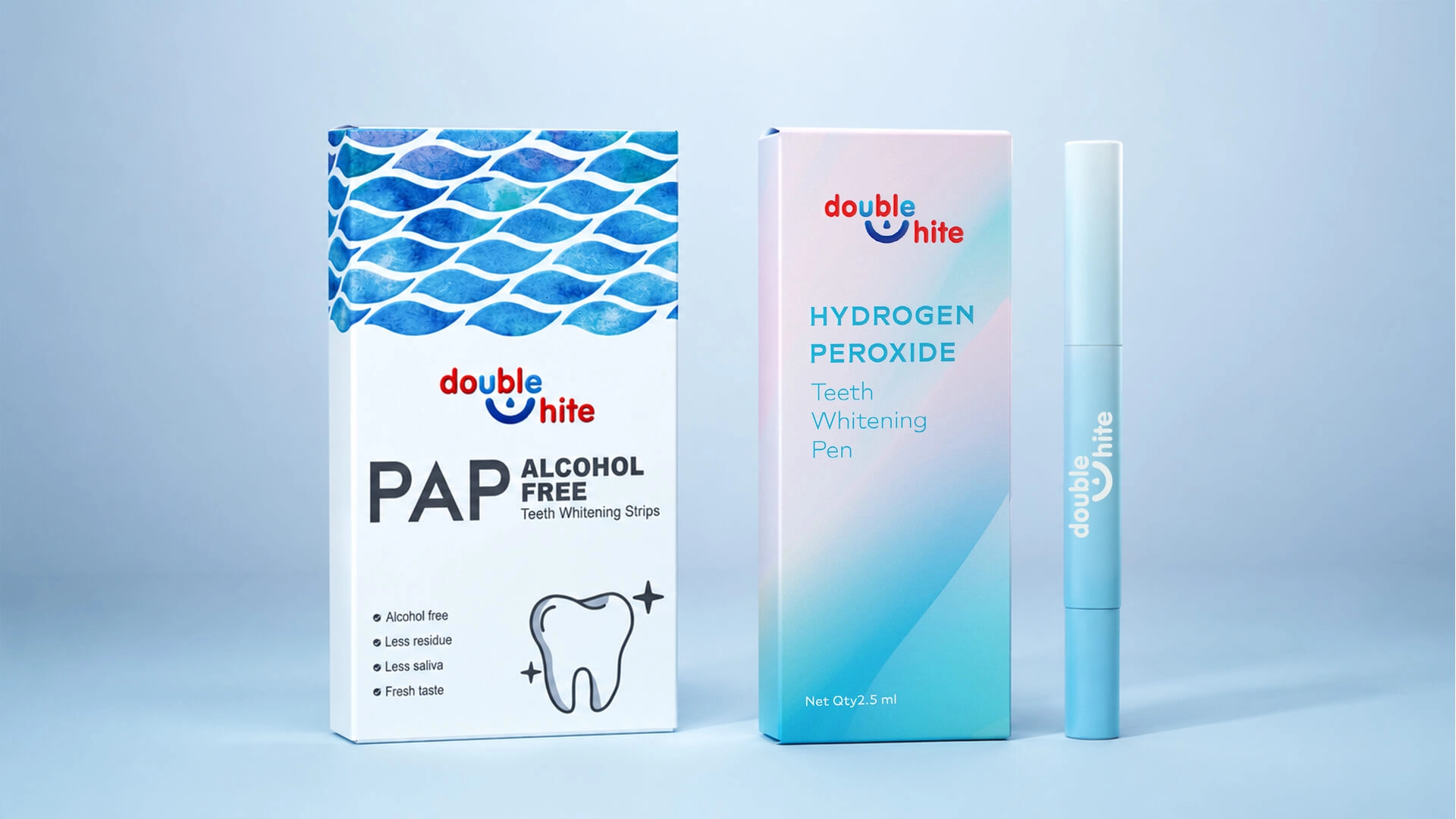
Whitening Pen Formula Stability: What Buyers Should Test Before Bulk Production
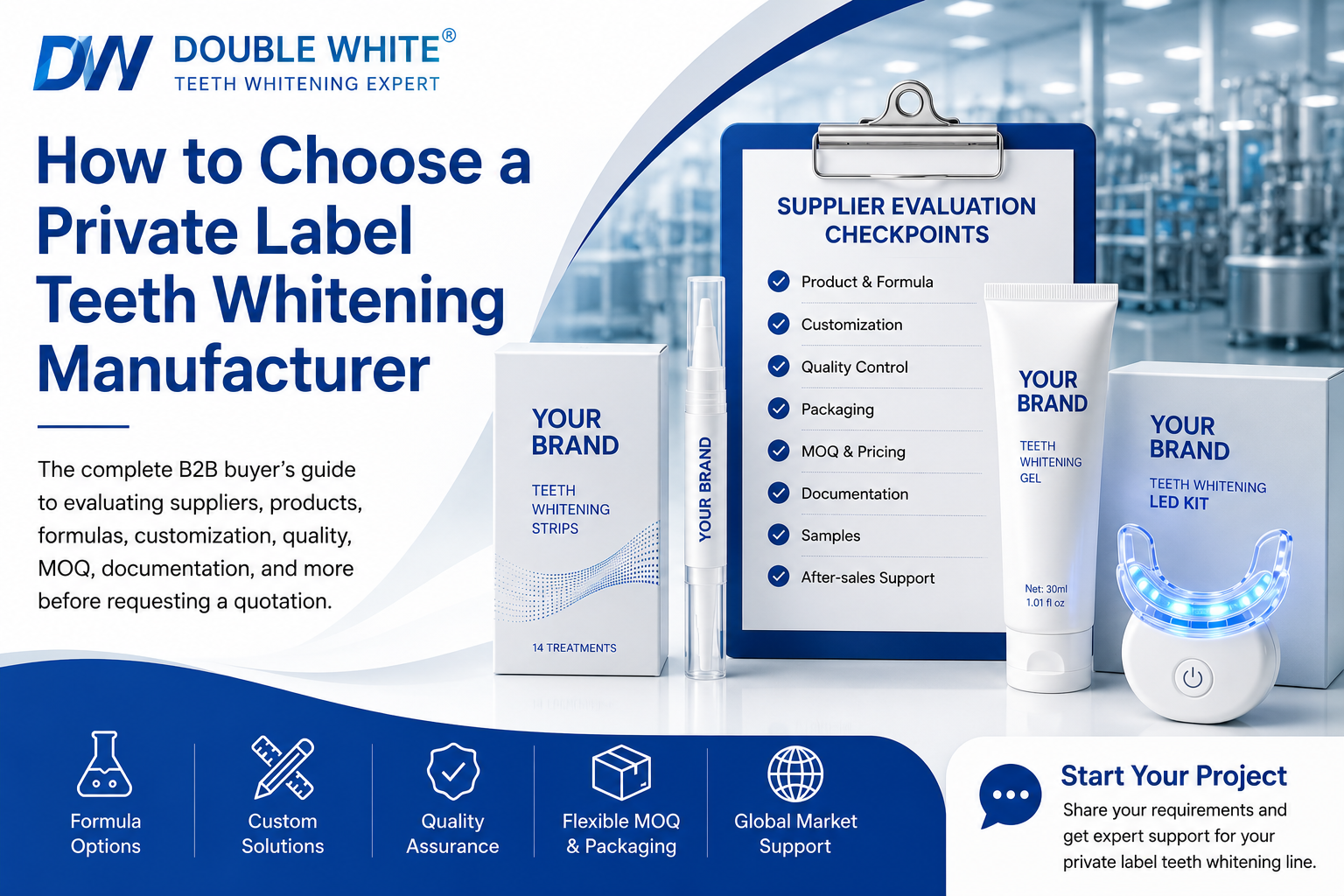
How to Choose a Private Label Teeth Whitening Manufacturer
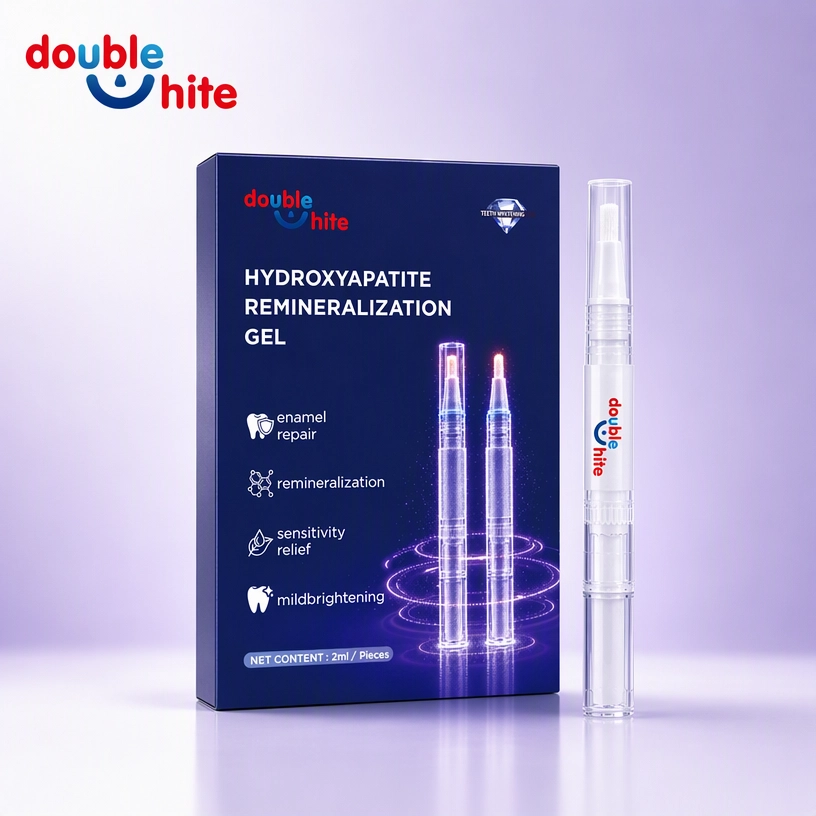
Hydroxypatite Remineralization Teeth Whitening Gel
Hydroxyapatite (HAP) oral-care gel for OEM and private label projects. Confirm actual composition, dispenser, fill volume, stability, packaging and testing before making remineralization, enamel repair or sensitivity claims.
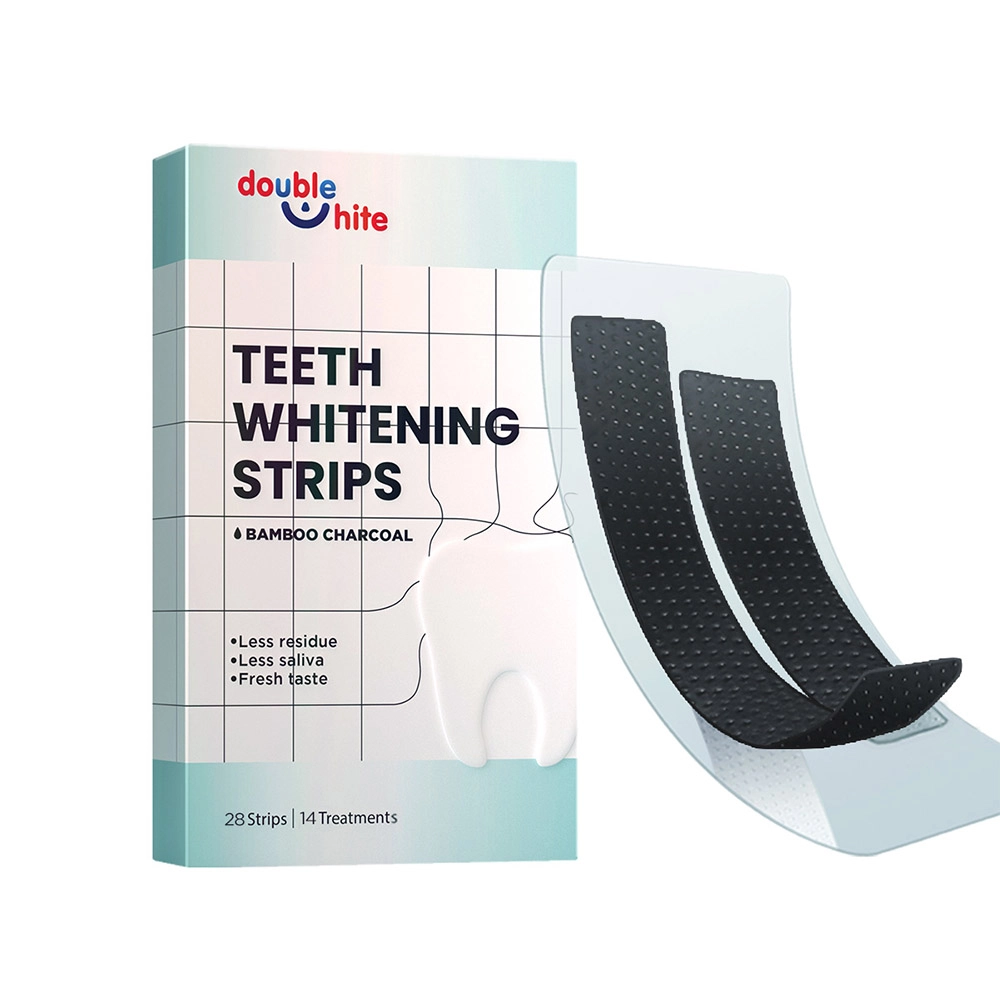
Charcoal Teeth Whitening Strips Wholsale
Double White Charcoal Teeth Whitening Strips Wholesale offers an effective, natural solution to brighten your smile. Infused with activated charcoal, these strips remove stains and whiten teeth gently. Ideal for bulk buyers seeking quality oral care products with proven results.
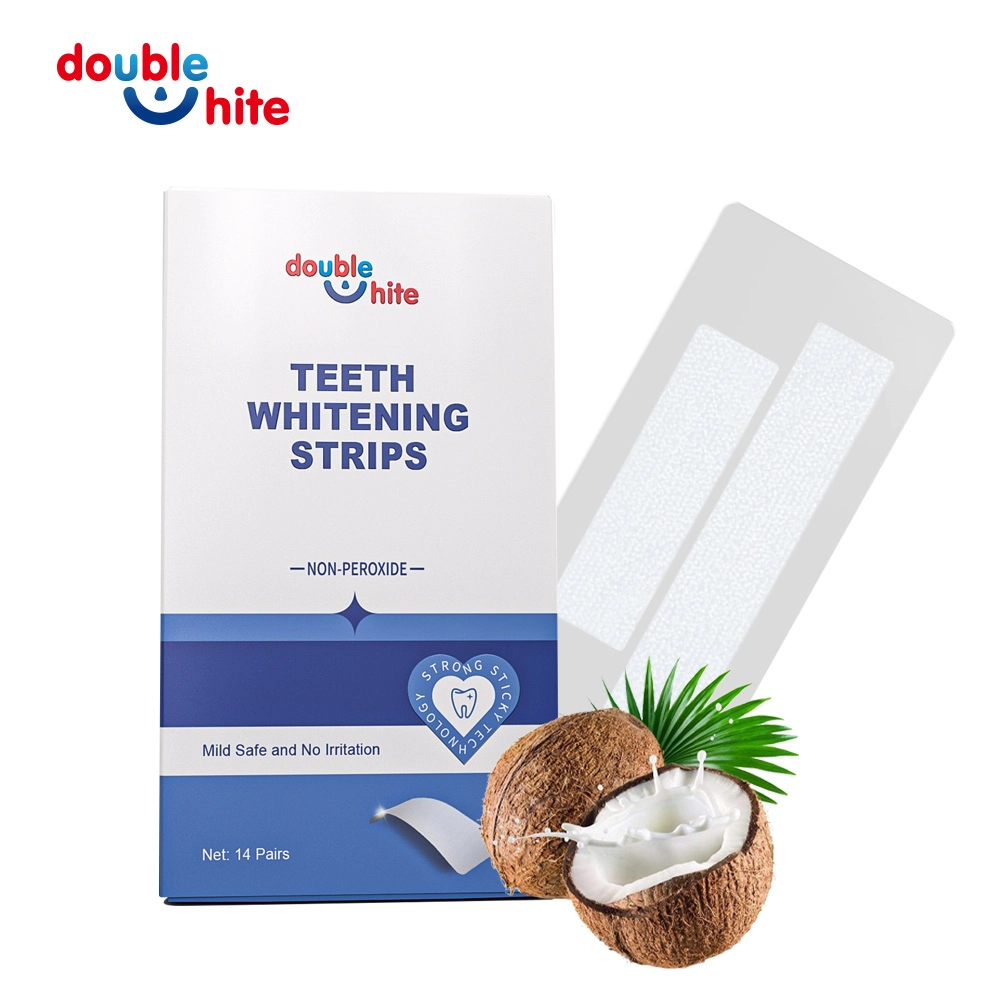
Sodium Chlorite Teeth Whitening Gel Strips for Private Label Brands
Sodium chlorite teeth whitening gel strips are designed for private label brands, wholesalers, salons, clinics, and e-commerce sellers seeking gel-based whitening strip products with flexible customization. This product uses sodium chlorite as the active ingredient and supports custom flavor, private label packaging, logo printing, sample development, and bulk production for different oral care markets.
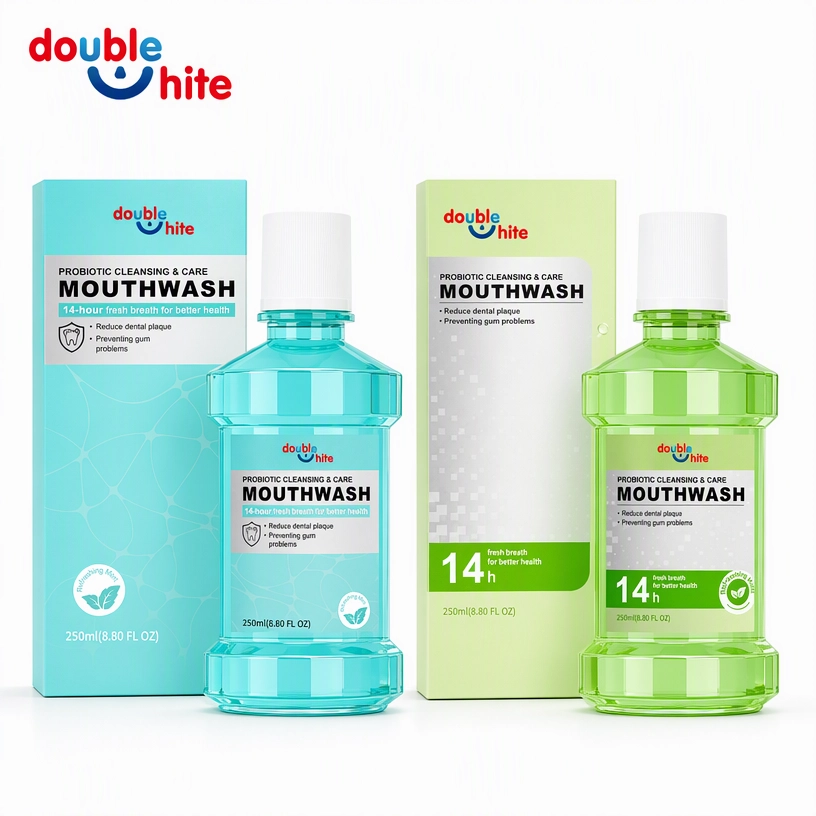
Mouthwash
Engineered for daily oral care, this dual-action formula functions as a proven mouthwash for bad breath and an enamel-safe teeth whitening mouthwash. Lab-tested for quality, it actively neutralizes odor compounds and lifts surface stains without harsh abrasives.
Send us your inquiry
Reach out to us through the form below or via the contact information provided.
Our dedicated team is committed to providing prompt and personalized responses to all your queries.
Please fill out the fields above with your full name, email address, and comment.


Copyright © 2026 Double White All Rights Reserved. Designed by gooeyun
Whatsapp: +8615920313473
cndoublewhite
Doublewhite
doublewhite
cndoublewhite
cndoublewhite
Double White