






Teeth Whitening Strips OEM vs ODM Manufacturer: Which Model Fits Your Brand?
Learn how OEM and ODM teeth whitening strips manufacturing differ, which model fits your brand, and what to verify before selecting a global supplier.

- Quick Answer
- OEM vs ODM Teeth Whitening Strips: What Is the Difference?
- Buyer Need: Define the Application Before Selecting the Model
- Formula and Format Selection: What Should the Product Do?
- Common Sourcing Risks and Cost Drivers
- Customization Options for OEM and ODM Whitening Strips
- Six-Step OEM and ODM Development Workflow
- How to Evaluate a Teeth Whitening Strips OEM ODM Manufacturer
- Project Information Checklist for a Qualified RFQ
- Conclusion and Next Steps
- Send Your Requirements for a Practical Quote
- Frequently Asked Questions
- References
Choosing a teeth whitening strips OEM ODM manufacturer is not simply a matter of comparing quotations. The manufacturing model determines who controls the formula, how much development work the buyer must manage, what can be customized, how documentation is prepared, and whether the finished product supports the intended market and sales channel.
Quick Answer
OEM is usually the better fit when the buyer has a defined formula, technical specification, proprietary concept, or strict product-control requirement. The manufacturer produces according to buyer-provided or buyer-controlled specifications.
ODM is usually more suitable when the buyer wants to start from an existing product-development foundation and make agreed changes. The supplier may provide a formula direction, strip format, or product platform that the buyer adapts through packaging, artwork, positioning, or selected technical changes.
Neither model is universally better. The decision depends on target market, active system, product differentiation, internal technical resources, documentation responsibility, packaging requirements, MOQ, and the required order model.
OEM vs ODM Teeth Whitening Strips: What Is the Difference?
| Decision factor | OEM teeth whitening strips | ODM teeth whitening strips |
|---|---|---|
| Starting point | Buyer-provided or buyer-controlled specifications | Supplier’s existing product-development foundation |
| Formula control | Typically greater buyer control over the active system, strength, ingredients, and technical brief | Buyer selects from available routes and agrees on permitted changes |
| Development responsibility | Buyer normally contributes more technical requirements, acceptance criteria, and approvals | Supplier contributes more initial product direction, while the buyer remains responsible for market fit and claims decisions |
| Packaging and artwork | Can be specified in detail by the buyer | Can also be customized, but the scope depends on the supplier’s platform and order requirements |
| Product differentiation | Suitable for proprietary formulas, specialized formats, or tightly controlled product concepts | Suitable for private-label launches with selected differentiation |
| Ownership and exclusivity | Must be defined for the buyer’s formula, artwork, data, and development materials | Must distinguish standard platform rights from project-specific developments |
| Main risk | More technical work, approval points, and development responsibility | A product may remain broadly similar to other supplier-platform products unless differentiation is clearly specified |
What OEM means for a whitening strips buyer
Original Equipment Manufacturing means that production follows specifications supplied or controlled by the buyer. A specification may cover the active system, formula direction, concentration or strength, strip shape, film construction, wear experience, packaging, labeling, and permitted product claims.
OEM is appropriate when the buyer already knows what the product must do and can describe measurable or reviewable requirements. The supplier’s role is to assess feasibility, prepare samples, manufacture the approved product, and provide the agreed documentation and production controls.
What ODM means for a whitening strips buyer
Original Design Manufacturing starts with the supplier’s existing product-development foundation. The buyer may select a hydrogen peroxide, sodium chlorite, or PAP route and request agreed changes to the formula direction, strip format, film appearance, packaging, artwork, or positioning.
ODM can reduce the buyer’s initial formulation workload, but it does not remove the need for market review. The buyer still needs to confirm that the proposed formula, claims, labeling, documentation, and user experience are suitable for the destination market.
Ownership and control must be contractual
The terms OEM and ODM do not by themselves determine ownership. Before approving samples, document who owns or may use the formula, artwork, test data, claims, tooling or developed materials, and whether the product is exclusive. Also define confidentiality, change control, reapproval, and permitted use rights.
For broader information on manufacturing environments and supplier selection, see this guide to a teeth whitening strips factory. Buyers comparing formula, shape, film, and packaging control can also review the customization depth under OEM and ODM.
Buyer Need: Define the Application Before Selecting the Model
The correct OEM or ODM route cannot be selected until the buyer defines where, how, and by whom the strips will be sold and used.
| Requirement | Information to prepare | Effect on the project |
|---|---|---|
| Target market | Country or region, product category, proposed claims, and importer requirements | Influences active-system review, labeling, documentation, and product classification |
| Sales channel | E-commerce, retail, wholesale, salon, training school, dental clinic, or professional distribution | Determines packaging, education, instructions, and product-information needs |
| User environment | At-home, supervised, professional, travel, or rapid-use application | Influences adhesion, wear format, residue, dissolution, and instructions |
| Product role | Entry SKU, premium differentiator, core whitening product, or line extension | Helps determine whether standard ODM or deeper OEM work is justified |
| Internal resources | Formulation, regulatory, claims, artwork, and procurement capabilities | Shows how much technical responsibility the buyer can realistically manage |
Target market and regulatory pathway
Market selection should come before active-system selection. Hydrogen peroxide, sodium chlorite, and PAP are separate formulation routes. Their suitability depends on local rules, product classification, strength, claims, labeling, and supporting documentation.
Regional market assumptions are only starting points, not automatic compliance conclusions. The supplied industry information indicates that hydrogen peroxide routes are commonly considered in North America, while sodium chlorite and PAP may be relevant to markets or positioning where non-hydrogen-peroxide options are preferred. European, Australian, Chinese, Middle Eastern, and other market requirements must be confirmed for the specific product.
For North American projects, buyers can use the U.S. Food and Drug Administration guidance on cosmetics and regulation as a general reference. It does not, by itself, establish approval of a specific whitening-strip product or supplier.
Sales channel and user environment
An e-commerce product may require compact retail packaging, simple instructions, and disciplined claims because the product is often explained without professional assistance. Salons and training schools may need practical handling information and product education. Dentists and clinics generally require organized technical documentation and clearly defined professional-use boundaries.
Product positioning and technical resources
A startup may prefer an existing development foundation with limited, clearly defined changes. An established oral-care brand may require tighter control over formula and claims. A wholesaler may need several region-specific options with consistent documentation. The more the product’s value depends on a proprietary formula or specialized user experience, the stronger the case for a detailed OEM brief.
Formula and Format Selection: What Should the Product Do?
Active-system considerations
Hydrogen peroxide, sodium chlorite, and PAP should be treated as different active or formulation routes rather than grouped under one chemical classification. The selection should consider target-market rules, product positioning, intended claims, available documentation, and the buyer’s acceptance criteria.
Scientific literature can inform discussions about dental bleaching agents, but it does not replace product-specific testing or jurisdiction-specific regulatory review. The NCBI PubMed Central research database can be used to locate published research for technical evaluation.
Buyers comparing these routes can use this formula comparison for hydrogen peroxide, PAP, and sodium chlorite strips when preparing questions for a supplier.
Strip construction and user experience
| Format or feature | Potential application value | Questions to verify |
|---|---|---|
| Wet gel strip | Traditional gel-on-film format | Is rinsing required? How are movement, overflow, and handling addressed? |
| Dry gel strip | Designed for a drier application experience and potentially improved adhesion | How does the strip perform on the intended tooth surface and during movement? |
| No-residue strip | Supports a convenient, low-residue application | What residue level is acceptable, and what instructions are required? |
| Dissolvable strip | Single-layer format designed to dissolve during use | How is dissolution behavior evaluated under intended use conditions? |
| Alcohol-free strip | May support particular market, religious, or sensitive-use positioning | Are the formulation, claims, and documentation consistent with that positioning? |
| Polymer-reduced or natural-positioned strip | May support vegan or material-positioning requirements | Which materials are used, and how are the claims substantiated? |
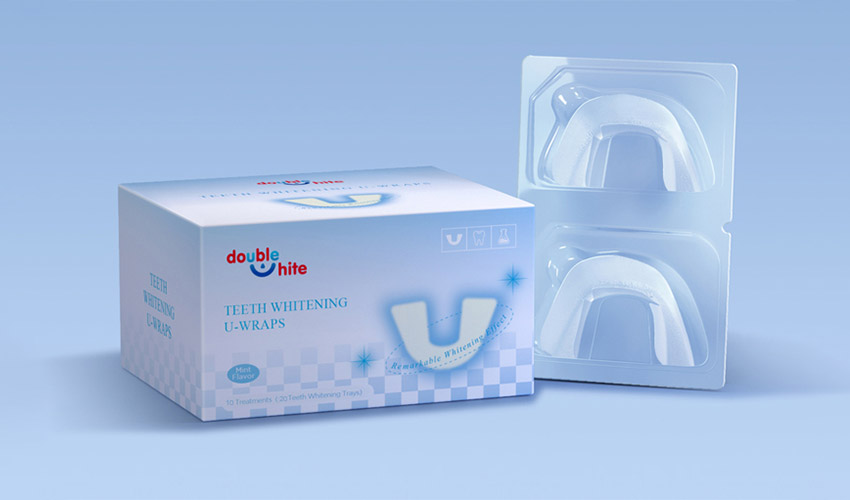
| U-shaped strip | Designed to improve coverage across different tooth alignments | Does the shape meet the buyer’s coverage and handling requirements? |
Adhesion, tooth coverage, wear experience, residue, dissolution, and instructions should be evaluated together. A convenient format is not automatically suitable for every channel or user group.
Common Sourcing Risks and Cost Drivers
Frequent buyer pain points
- Selecting a formula before defining the destination market.
- Assuming packaging artwork creates product-level differentiation.
- Requesting excessive changes without separating essential from optional requirements.
- Accepting claims before confirming supporting information and responsible approval parties.
- Failing to distinguish a standard ODM platform from a project-specific development.
- Approving samples without testing them in the intended use environment.
- Choosing a supplier whose MOQ, logistics, or order model does not match the business plan.
What affects a quotation without using unsupported price assumptions?
A useful quote should separate the cost impact of each project element rather than presenting one unexplained unit figure. The main variables commonly include:
- Formula scope: standard ODM route, formula adjustment, or deeper OEM development.
- Active system and material requirements: selected formula route, ingredient restrictions, film, adhesive, and special positioning.
- Packaging: pouch or sachet format, carton configuration, pack count, printing, languages, and packaging components.
- Documentation: specifications, ingredient information, safety or risk-assessment documents, test reports, labeling files, and market-specific review.
- Sampling and revision scope: number of sample versions, artwork changes, formula changes, and approval stages.
- Order volume and MOQ: standard products and customized packaging or formulation projects may have different requirements.
- Logistics: destination, import arrangement, shipping term, and whether DDP or DDU is requested.
Do not compare quotes only by unit price. Compare what is included, what remains the buyer’s responsibility, and which changes could create additional approval or documentation work. A separate guide explains teeth whitening strips factory MOQ and pricing from a purchasing perspective.
Customization Options for OEM and ODM Whitening Strips
| Customization level | Typical scope | Best suited to |
|---|---|---|
| Standard ODM | Existing formula route, standard strip format, buyer artwork, and agreed packaging | Startups and brands testing a category with limited technical resources |
| Packaging customization | Carton, pouch, artwork, language, pack count, and visual film options | Brands prioritizing retail or e-commerce identity while retaining a standard product platform |
| Product customization | Formula direction, active system, flavor where applicable, strip shape, film, or wear experience | Brands requiring functional differentiation or market-specific positioning |
| Deep OEM | Buyer-controlled technical brief, defined acceptance criteria, project-specific approvals, and documented ownership terms | Established brands, distributors, and buyers with proprietary concepts or strict control requirements |
Available customization may include formulas, flavors, strip shapes, base-film printing, conceptual active ingredients, colored top-films, and packaging. Actual scope depends on technical feasibility, order requirements, documentation, and contractual terms. A colored top film can be available in options such as purple, blue, pink, or black, but visual differentiation should not be confused with a change in whitening performance.
Six-Step OEM and ODM Development Workflow
- Requirement intake: Submit the target market, user environment, sales channel, formula direction, strip format, packaging, documentation needs, expected order model, and destination.
- Route selection: Compare standard ODM options with customized formula or deep-OEM requirements. Separate mandatory specifications from optional preferences.
- Technical and commercial review: Confirm feasibility, MOQ, packaging scope, logistics options, ownership provisions, document responsibilities, and any market-specific questions. Payment terms and project-specific commercial terms must be confirmed directly.
- Sampling: Review formula direction, adhesion, coverage, residue, dissolution, appearance, packaging, and instructions under the intended use conditions.
- Revision and document approval: Record each formula, artwork, and packaging revision. Align the approved sample with specifications, labeling files, claims, and relevant safety or test documentation.
- Order and post-approval control: Approve the final product version and define how ingredient, film, packaging, supplier, or artwork changes will be communicated and reapproved. Confirm batch records, traceability, shipping terms, and the process for reporting quality issues after delivery.
This workflow does not imply a fixed sample, production, or delivery time. The project schedule depends on the number of revisions, testing, artwork approval, documentation, and destination-market requirements.
How to Evaluate a Teeth Whitening Strips OEM ODM Manufacturer
Manufacturing and quality-system evidence
Ask for evidence that relates to the actual product and facility rather than relying on general marketing statements. Evaluation topics include the manufacturing environment, production-line suitability, incoming-material checks, in-process controls, finished-product review, packaging inspection, batch traceability, and change-control records.
Published cosmetics standards from the International Organization for Standardization can provide general benchmarks for manufacturing and quality practices. An ISO information page does not prove that a specific product is approved or that a specific facility holds a particular certification. Certification scope, validity, product classification, and destination market must be checked separately.
Customization and documentation capability
Request a written separation between standard ODM products, packaging-only customization, formula adjustments, and deep OEM development. Clarify which party prepares and approves specifications, ingredient information, claims, artwork, safety documentation, test reports, labeling, and regulatory submissions.
MOQ, logistics, and order-model fit
For the referenced supplier, published project information states a 30,000-square-meter Class 100,000 cleanroom facility, eight automated production lines, daily capacity of up to 320,000 pairs of whitening strips, and a customized-order MOQ of 1,000 boxes. These figures should be reconfirmed for the current product, formula, packaging, and production plan.
The same published information states that DDP and DDU door-to-door delivery options may be available, while overseas warehouses and dropshipping are not supported. This distinction matters for wholesalers, e-commerce brands, and startups that may otherwise assume fulfillment services are included. The buyer should confirm destination, importer responsibility, shipping term, documentation, and after-sales handling before placing an order.
Questions to ask before approval
- Which formula and strip components are standard, buyer-controlled, or newly developed?
- What acceptance criteria will be used for adhesion, coverage, residue, dissolution, appearance, and packaging?
- Which documents apply to the selected formula and destination market?
- Who owns or may use the formula, artwork, claims, test data, and project-specific materials?
- What changes require written reapproval after the final sample is approved?
- How are nonconforming goods, packaging errors, or batch discrepancies reported and resolved?
- What MOQ and logistics terms apply to standard, packaging-customized, and formula-customized orders?
Project Information Checklist for a Qualified RFQ
| RFQ area | Information to include |
|---|---|
| Buyer profile | Startup, wholesaler, established brand, e-commerce seller, salon, training school, dentist, or clinic |
| Market and channel | Destination country or region, sales channel, intended users, and product classification assumptions |
| Formula | Preferred hydrogen peroxide, sodium chlorite, PAP, or supplier-recommended route; ingredient restrictions and positioning |
| Strip format | Wet, dry, no-residue, dissolvable, alcohol-free, polymer-reduced, U-shaped, or another defined format |
| Performance expectations | Adhesion, tooth coverage, wear experience, residue, dissolution, rinse requirement, and instructions |
| Packaging | Pouch or sachet, carton, pack count, dimensions if known, languages, artwork status, and storage information |
| Documents | Product specification, ingredient information, safety or risk assessment, test reports, labeling files, and batch records |
| Commercial requirements | Standard or custom order, expected volume, MOQ assumptions, delivery destination, import arrangement, and logistics preference |
Conclusion and Next Steps
Choose OEM when control over the formula, specification, claims, or product concept is the main priority. Choose ODM when an existing product-development foundation can meet the market need with selected changes. In both cases, the buyer should connect formula selection, strip format, packaging, documentation, ownership, quality checks, MOQ, and logistics in one written project brief.
The most efficient next step is not to request a generic “best product.” It is to submit a defined application scenario and ask the supplier to separate standard ODM options from packaging customization, formula customization, and deeper OEM development.
Send Your Requirements for a Practical Quote
Prepare your target market, buyer type, active-system preference, strip format, packaging expectations, documentation needs, estimated order model, and delivery destination. A supplier can then assess the appropriate development route and identify the information still required for sampling, quotation, and approval.
Request a quote for your teeth whitening strips OEM or ODM project
Frequently Asked Questions
References
Purple Violet Teeth Whitening U-Wraps for Private Label & Wholesale
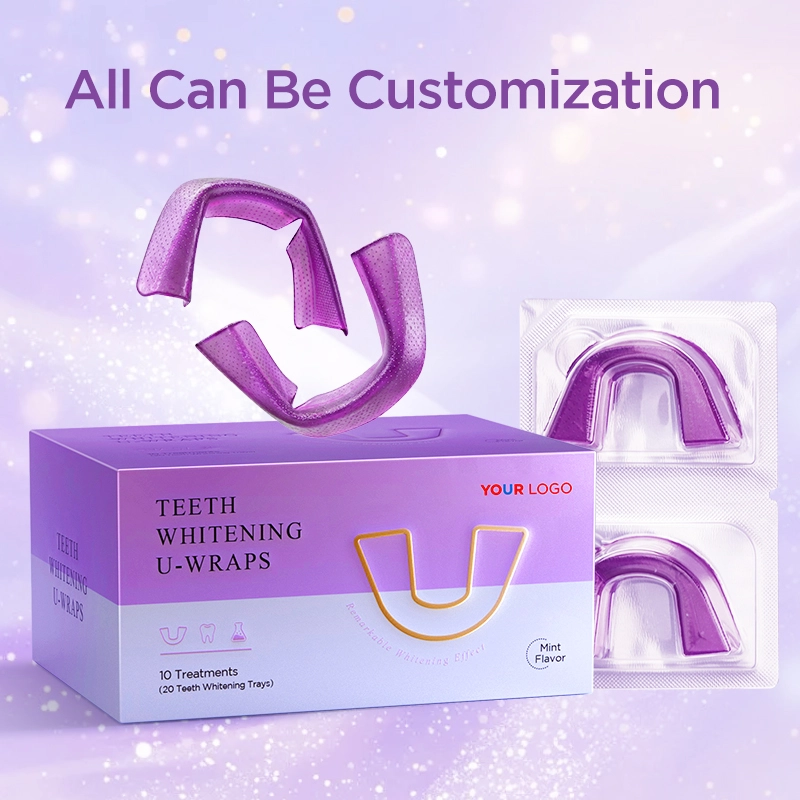
Purple Teeth Whitening U-Wraps: Private Label Sourcing Guide for Brands
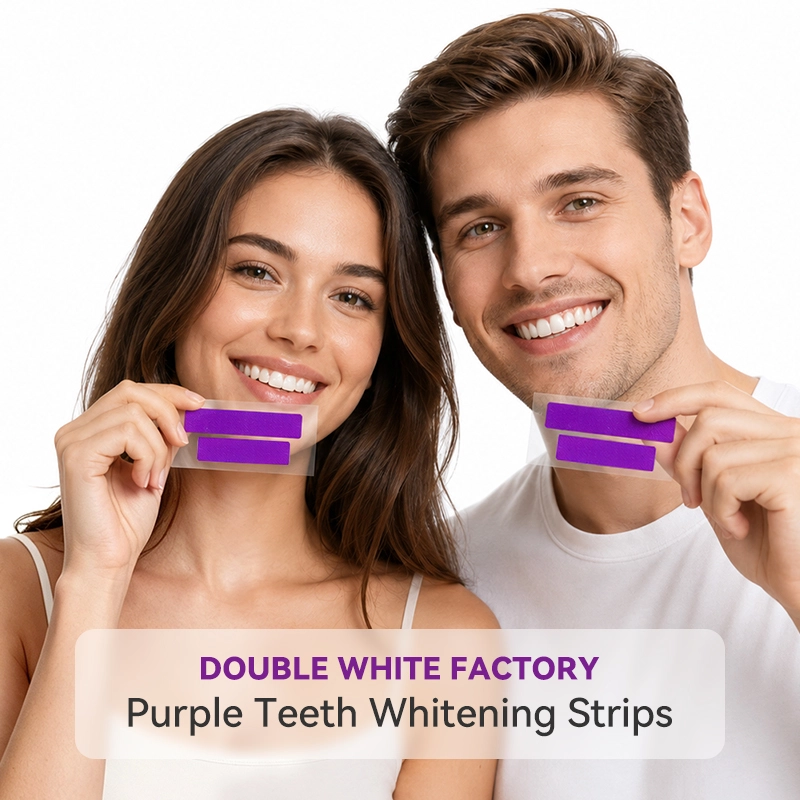
How Do Purple Teeth Whitening Strips Work? A Color-Correction Guide for Private Label Buyers

Whitening Pen Applicator & Dispensing Guide: What Buyers Should Check Before Bulk Production
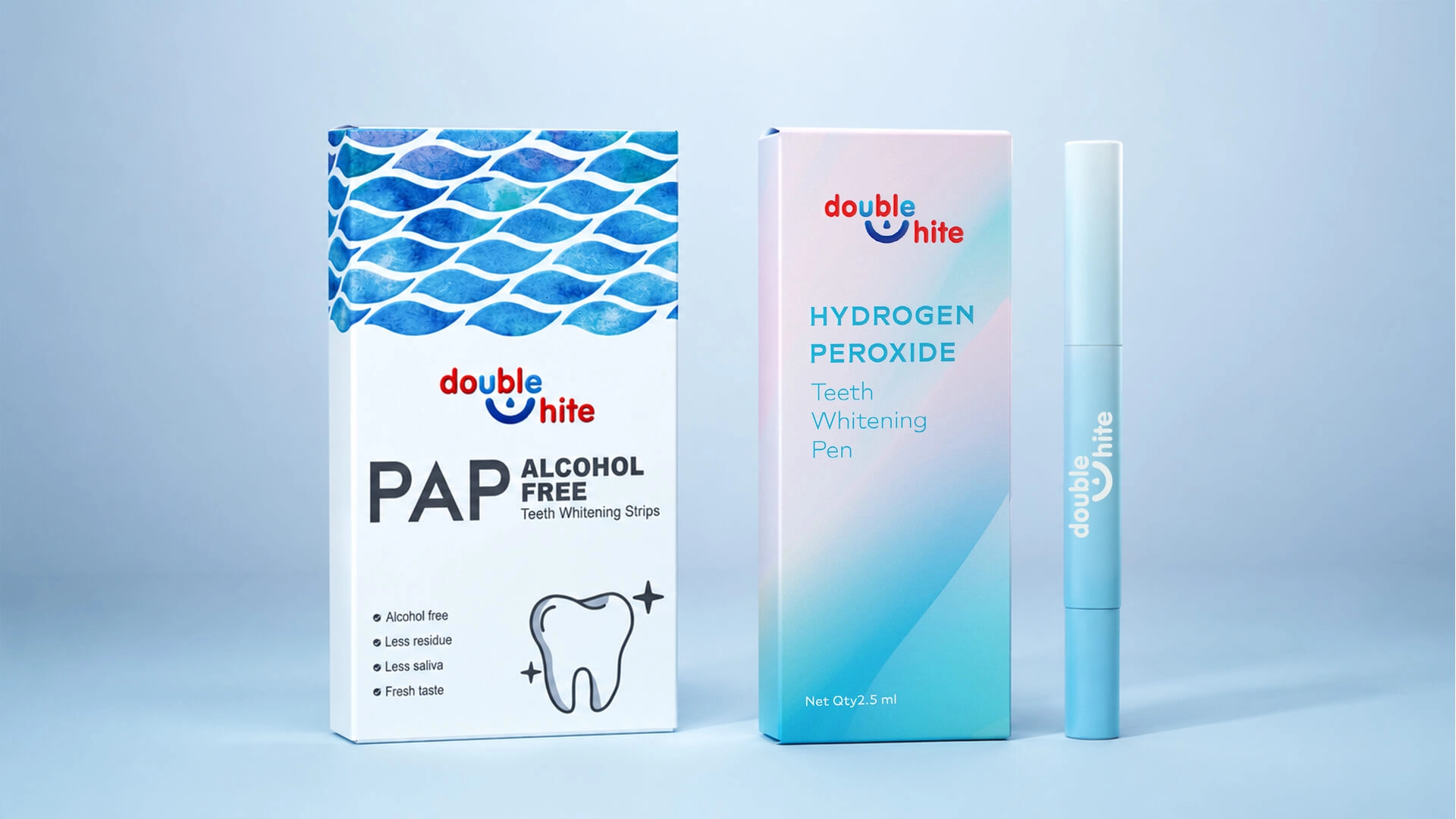
Whitening Pen Formula Stability: What Buyers Should Test Before Bulk Production
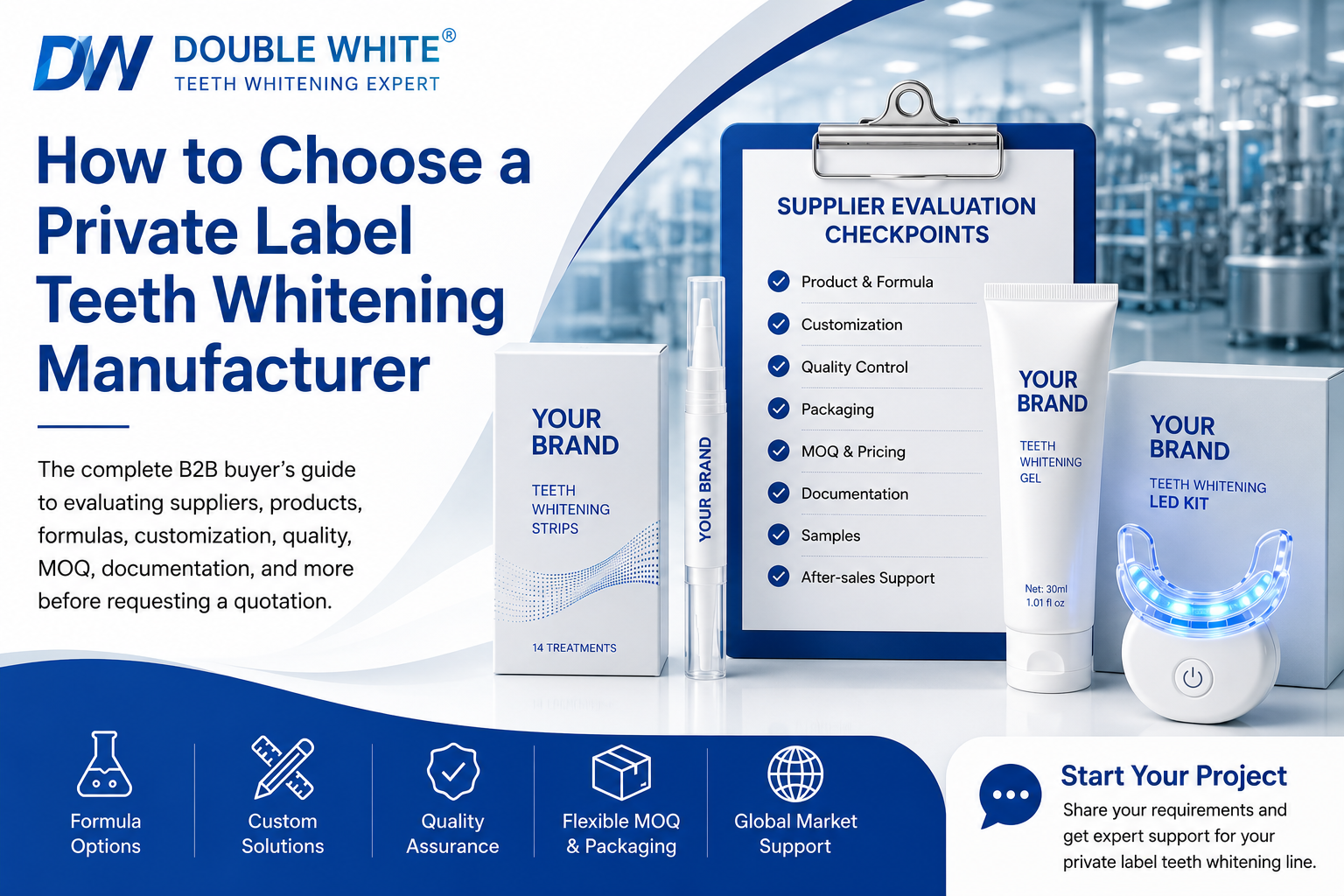
How to Choose a Private Label Teeth Whitening Manufacturer
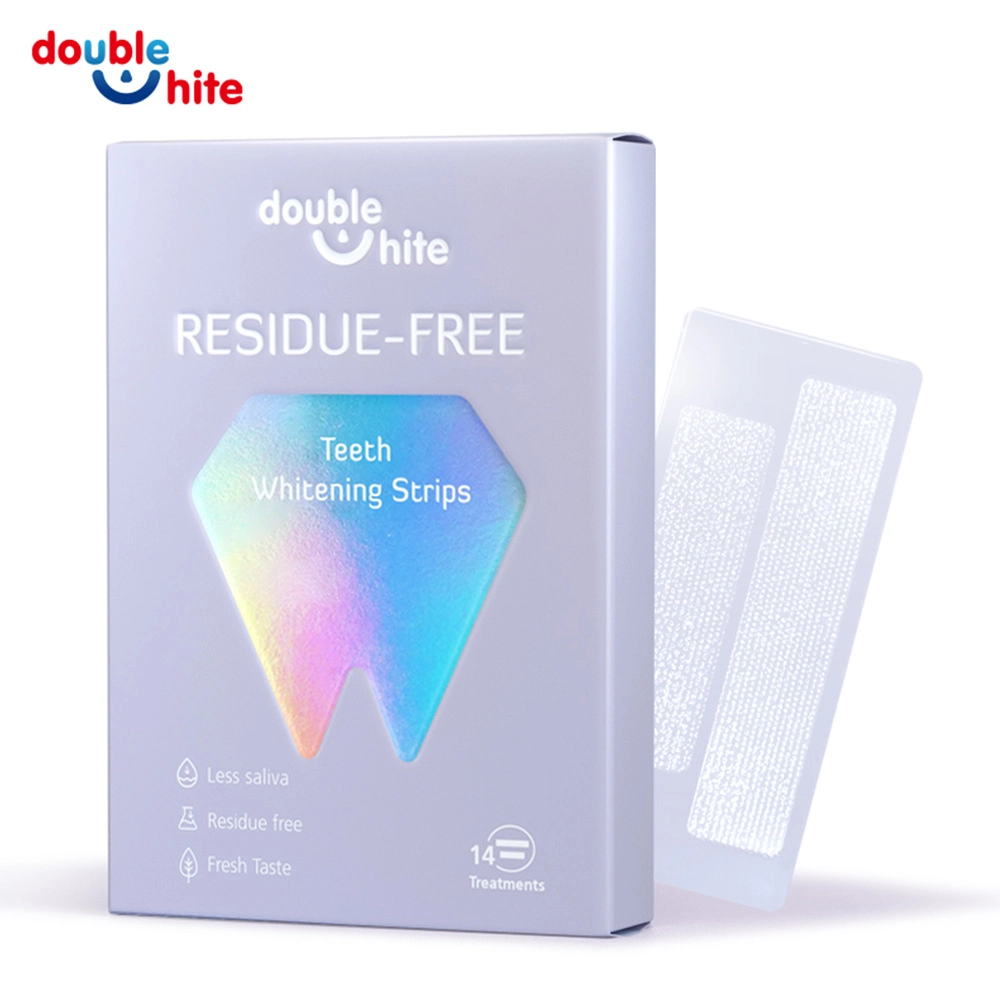
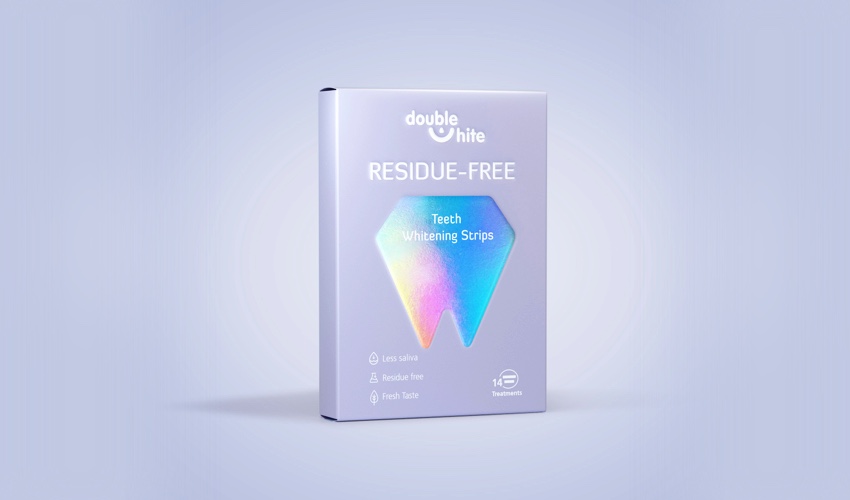
Hydrogen Peroxide Residue-Free Teeth Whitening Strips RFHP02
RFHP02 Hydrogen Peroxide Residue-Free Teeth Whitening Strips are designed for private label brands, wholesalers, salons, clinics, and e-commerce sellers looking for whitening strips with strong adhesion, clean removal, and a low-residue user experience. Double White supports custom flavor, private label packaging, logo printing, sample support, and bulk production for global oral care businesses.
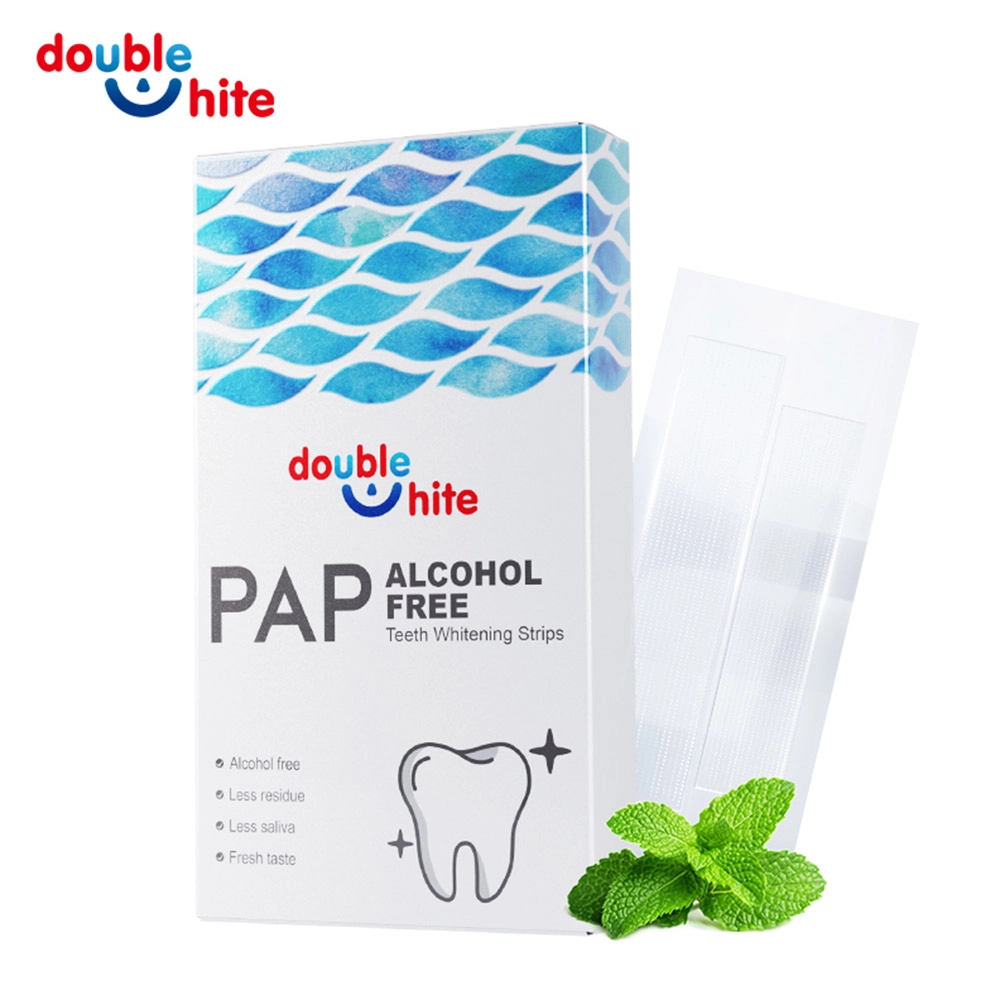
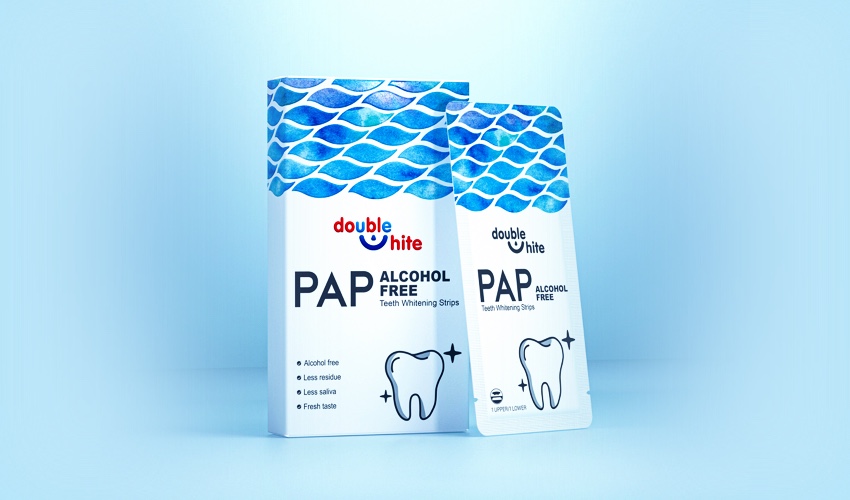
PAP Non-Alcohol teeth whitening strips OEM ODM PAPNA-01
PAPNA-01 PAP non-alcohol whitening strips for private label and wholesale projects. Review verified PAP formula, strip specification, packaging, treatment count, samples and relevant quality documentation. Sensitivity and performance claims require product-specific evidence.

Custom Mint Flavor Teeth Whitening Powder
Custom Mint Flavor Teeth Whitening Powder is designed for private label brands, wholesalers, salons, clinics, and e-commerce sellers seeking powder-based oral care products with flexible OEM/ODM customization. Double White supports custom formula positioning, mint or customized flavor, private label packaging, logo printing, sample development, and bulk production for different oral care markets.

Dissolving Teeth Whitening Strips
Double White Dissolving Teeth Whitening Strips offer an easy, mess-free way to brighten your smile. These strips dissolve quickly, delivering effective whitening results without residue. Perfect for daily use, they ensure a confident, radiant smile in minutes. Try Double White today!
Send us your inquiry
Reach out to us through the form below or via the contact information provided.
Our dedicated team is committed to providing prompt and personalized responses to all your queries.
Please fill out the fields above with your full name, email address, and comment.


Copyright © 2026 Double White All Rights Reserved. Designed by gooeyun
Whatsapp: +8615920313473
cndoublewhite
Doublewhite
doublewhite
cndoublewhite
cndoublewhite
Double White