







Teeth Whitening Strips Factory MOQ and Pricing: What B2B Buyers Should Budget For
A practical B2B guide to teeth whitening strips factory MOQ and pricing, covering cost drivers, quotation requirements, common mistakes, DFM savings, and supplier evaluation.

- Quick Answer: What Should Buyers Budget For?
- What Determines Teeth Whitening Strips Factory MOQ and Pricing?
- Key Cost Factors in a Teeth Whitening Strips Factory Quote
- Cost Impact Table: Which Choices Have the Biggest Effect?
- Cost Breakdown by Process or Component
- How to Get an Accurate Teeth Whitening Strips Factory Quote
- Common Quoting Mistakes That Increase Project Cost
- Cost Reduction Strategies for Private-Label Whitening Strips
- How to Choose the Right Supplier for Cost Optimization
- Conclusion and Next Steps
- Discuss Your Project Requirements
- Frequently Asked Questions
- References
Factory pricing for private-label teeth whitening strips is not a single category price. A reliable quotation is built from the formula, concentration, strip format, order quantity, packaging, artwork, testing, destination market, shipping terms, and customization scope. Buyers who compare only a headline unit price often discover that samples, packaging revisions, documentation, freight, duties, or compliance work were excluded.
Quick Answer: What Should Buyers Budget For?
Why there is no universal factory price
There is no universal price for a teeth whitening strips factory because two products described as “whitening strips” may use different active ingredients, concentrations, film structures, wear formats, pack counts, and regulatory documentation. A wet hydrogen peroxide strip in a simple sachet is not commercially equivalent to a dissolvable PAP strip in a printed retail box.
For this reason, buyers should budget in cost categories rather than expect one fixed industry number. The quotation should separate product manufacturing, packaging, samples, testing, documentation, freight, and any destination-related charges. A practical teeth whitening strips factory guide should be read alongside a project-specific quotation, not used as a substitute for one.
What MOQ means in a private-label project
MOQ, or minimum order quantity, is the smallest quantity a supplier accepts for a defined product and customization scope. It is not automatically the same as the quantity needed for a commercially viable launch. A factory may accept a certain number of boxes for a custom formula and package, while the buyer may need a different quantity to test sales, support several channels, or avoid excess inventory.
MOQ is usually assessed by SKU, formula, pack configuration, packaging artwork, and production setup. Buyers should confirm whether the stated MOQ applies to each flavor, concentration, package size, or market version separately.
Which inputs determine the quotation
The quotation brief should identify the active ingredient preference, target market, concentration, strip format, pack count, film requirements, flavor, shape, packaging structure, artwork status, testing expectations, order quantity, delivery destination, and preferred Incoterm. Requesting a line-item quotation makes it possible to distinguish the product cost from the total landed cost.
Buyers who need a broader checklist should review the supplier information needed for a teeth whitening strips factory before contacting manufacturers.
What Determines Teeth Whitening Strips Factory MOQ and Pricing?
MOQ versus minimum viable launch quantity
Factory MOQ is a supplier acceptance threshold. Minimum viable launch quantity is a commercial decision based on expected demand, inventory risk, channel testing, and cash flow. Treating MOQ as a guaranteed sell-through quantity can leave a startup with more stock than its first market can absorb.
Standard product versus custom product
A standard formula, established strip format, and existing packaging structure usually create fewer setup and approval variables. Custom formulation, concentration, shape, film, flavor, printed sachets, or retail packaging adds specification review and approval steps. Each additional variation can also create separate material purchasing and production planning requirements.
Product cost versus landed cost
Ex-factory or product pricing covers only part of the purchasing decision. Landed cost may include packaging, testing, documentation, freight, insurance, import duties, taxes, customs handling, and destination delivery. EXW, FOB, DDU, and DDP quotations should not be compared until their inclusions and buyer responsibilities are normalized.
Why market destination changes the quotation
Market destination affects formula selection, claims, labeling, documentation, and shipping. A formulation suitable for one region may require review or a different active ingredient in another. For example, the project knowledge identifies hydrogen peroxide options for North America, non-hydrogen-peroxide and sodium chlorite or PAP options for European projects, and alcohol-free formats for some Middle Eastern requirements. These are planning references, not a substitute for current market-specific legal review.
The production sequence, from formulation through packaging, also explains why changes made late in the project can alter both cost and approval work. The teeth whitening strips manufacturing process is therefore relevant when interpreting a quotation.
Key Cost Factors in a Teeth Whitening Strips Factory Quote
Formula and active ingredient selection
Hydrogen peroxide, sodium chlorite, and PAP formulations use different raw-material and market-compliance assumptions. Concentration changes the formula brief and may change documentation or destination-market review. A buyer should not select an active ingredient by unit cost alone; the formula must support the intended claims, consumer profile, market, and required evidence.
For more context on this related topic, see custom teeth whitening strips manufacturer.
Research literature on dental bleaching agents can help product teams frame technical questions. The National Center for Biotechnology Information (NCBI) - PubMed Central Research on Dental Bleaching Agents is a useful source for reviewing published information on bleaching agents, including hydrogen peroxide and PAP.
Strip format and technical generation
Wet and dry strips differ in gel handling, adhesion, wear experience, and packaging considerations. No-residue and dissolvable formats introduce different film and conversion requirements. Alcohol-free, natural or polymer-reduced, and U-shaped formats may also require specific material and process assumptions. A format that appears inexpensive at the material level may require more development or validation work.
Quantity and production planning
Order quantity affects material purchasing, production scheduling, packaging procurement, and setup allocation. Larger orders can improve production economics, but the actual quotation depends on the supplier’s planning assumptions and the number of separate SKUs. A buyer should request prices at commercially realistic quantities rather than assuming that a larger order automatically creates a fixed discount.
Customization scope
Custom flavors, strip shapes, base-film printing, colored top-films, pack counts, and special claims each need to be defined before pricing. A change in strip dimensions can alter material yield and pack configuration. A colored film can change the material specification and approval sample. These details belong in the quotation brief, not in informal follow-up messages after the price is issued.
Packaging and artwork
Packaging cost depends on whether the product uses individual sachets, cartons, inserts, retail boxes, or a combination. Artwork that is incomplete, incorrectly sized, or missing required labeling information causes revisions and can delay packaging approval. Suppliers should state whether artwork adaptation, proofing, printing plates or setup, samples, and revisions are included.
Testing and market compliance
Testing and documentation should be priced against the target market and intended claims. Buyers may need ingredient information, safety documentation, product specifications, test reports, or market-specific review. Requirements should be confirmed with the importer, regulatory adviser, or responsible brand owner rather than assumed from a general factory certificate.
For North American projects, the U.S. Food and Drug Administration (FDA) - Cosmetic Products Guidance & Regulation provides relevant guidance for cosmetic products, labeling, and regulatory considerations. It does not replace the buyer’s responsibility to confirm the classification and obligations for the specific product and claims.
Shipping terms and destination
DDU and DDP are not interchangeable. DDU typically leaves certain import duties, taxes, or customs responsibilities with the buyer, while DDP is structured to include more destination delivery responsibilities through the supplier or logistics arrangement. The exact inclusions must be written into the quotation. Compare freight, duties, taxes, customs handling, and final delivery as separate lines when possible.
Cost Impact Table: Which Choices Have the Biggest Effect?
How to read a cost impact matrix
The following matrix uses directional cost patterns, not guaranteed prices. “High” or “Very High” indicates that the decision commonly changes several quotation inputs or creates separate setup and approval work. The supplier should confirm the actual result for the selected formula, quantity, market, and packaging.
| Cost driver | Examples | Likely cost impact | Quotation dependency | Buyer action |
|---|---|---|---|---|
| Formula and concentration | Hydrogen peroxide, sodium chlorite, PAP, specialized care formula | High | Raw materials, claims, testing, destination market | Confirm formula, concentration, claims, and market before pricing |
| Strip format | Wet, dry, no-residue, dissolvable, U-shaped | High | Film, gel, conversion, wear format, packaging | Approve the intended format before comparing suppliers |
| Film and material choices | Film type, colored top-film, printed base film, polymer-reduced material | Medium to High | Material availability, appearance, conversion, approval samples | Specify appearance and material expectations clearly |
| Order volume | Initial order, repeat order, multiple SKUs | Medium to High | Production scheduling, procurement, setup allocation | Quote realistic quantities by SKU |
| Packaging structure | Sachets, cartons, inserts, retail boxes | High | Components, printing, assembly, artwork, pack count | Request a packaging bill of materials |
| Artwork readiness | Final files versus incomplete drawings | Low to Medium | Revision, proofing, approval, setup assumptions | Submit correct dimensions and final labeling content |
| Testing and documentation | Safety files, market review, testing, technical documents | Medium to High | Claims and destination-market requirements | List required documents before quotation |
| Shipping terms and destination | EXW, FOB, DDU, DDP, destination charges | High | Address, customs, duties, taxes, importer responsibility | Normalize offers to total landed cost |
High-impact versus low-impact decisions
Formula, format, packaging structure, order volume, and destination usually change the quotation more substantially than a minor artwork adjustment. However, a small artwork or dimension error can still create a disproportionate project cost if it forces packaging reprints or a new approval sample.
Information about a supplier’s production scope can help buyers judge whether the requested format and volume fit the manufacturing route. The Teeth Whitening Strips Manufacturing Capabilities page can support that preliminary review.
Questions to ask when a quote changes
- Which specification changed: formula, concentration, film, shape, pack count, or artwork?
- Did the supplier change the MOQ or the assumed order quantity?
- Were samples, testing, documents, setup, or packaging revisions added?
- Did the Incoterm or destination delivery responsibility change?
- Is the revised price based on the same number of SKUs?
Cost Breakdown by Process or Component
Product formulation and raw materials
This line should identify the active ingredient, concentration, formula basis, flavor, and any specialized ingredients. Ask whether raw-material testing, formulation adjustment, stability work, or sample preparation is included or quoted separately.
Film, gel, and strip conversion
Film and gel costs are connected to the selected strip generation. Conversion includes applying or forming the active layer, cutting or shaping the strips, and preparing them for individual packaging. Dimensions, U-shaped geometry, dissolvability, residue expectations, and surface appearance should be confirmed before the supplier calculates the final conversion scope.
Primary and secondary packaging
Primary packaging may include individual sachets or other direct-contact components. Secondary packaging may include cartons, inserts, retail boxes, and shipping cases. The quotation should identify quantities per pack, printed surfaces, material assumptions, assembly, and whether packaging samples are included.
Quality checks and documentation
Separate product inspection, packaging inspection, sample approval, testing, and document preparation. Buyers should ask whether certificates, safety data, ingredient documents, specifications, and market-support documents are included, optional, or supplied by the buyer.
For manufacturing-system benchmarks, the International Organization for Standardization (ISO) - Cosmetics Standards provides context on cosmetics standards and good manufacturing practice principles. A benchmark does not automatically confirm that a particular product or quotation includes every requested document.
Freight, duties, and delivery terms
The final quotation should identify the shipping origin, destination, transport method, Incoterm, customs responsibility, duties, taxes, and final delivery scope. If the supplier quotes DDP or DDU, request written clarification of what is included and what remains the buyer’s responsibility.
How to Get an Accurate Teeth Whitening Strips Factory Quote
Product brief checklist
| Information to provide | What the supplier should confirm |
|---|---|
| Product type and active ingredient | Formula basis, concentration, flavor, and available alternatives |
| Target market and claims | Market review, labeling assumptions, and required documentation |
| Strip format | Wet, dry, no-residue, dissolvable, alcohol-free, natural, or U-shaped format |
| Pack count and dimensions | Strip size, shape, quantity per sachet, box, and shipping case |
| Film, color, and flavor | Material, appearance, printing, and sample requirements |
| Packaging structure | Sachets, cartons, inserts, retail boxes, assembly, and artwork scope |
| Quantity and SKU plan | MOQ by SKU, price breaks if available, and production assumptions |
| Delivery details | Destination, delivery address, Incoterm, and freight basis |
Formula and market requirements
State the preferred active ingredient and explain whether the project requires a specific claim, consumer positioning, alcohol-free formula, vegan positioning, or sensitive-teeth focus. Do not ask a supplier to choose a market-compliance strategy from a destination name alone; identify the intended claims and obtain professional regulatory confirmation where needed.
Packaging and artwork files
Provide dielines, dimensions, pack counts, material preferences, print requirements, and final or provisional artwork status. Incomplete drawings create provisional quotations because the supplier must make assumptions about fit, tolerances, surface appearance, and assembly. Confirm who approves artwork and how many revision rounds are included.
Quantity and delivery information
Quote the initial quantity and the expected repeat-order structure separately. Include the number of SKUs, destination country, delivery address, desired shipping term, and whether the goods will enter a retail, e-commerce, clinic, salon, or wholesale channel.
Documents to request with the quotation
- A line-item cost sheet for product, packaging, samples, testing, documentation, freight, and other charges.
- Written MOQ by formula, SKU, packaging configuration, and customization scope.
- Quotation validity, currency, payment assumptions, and exclusions.
- Sample and artwork approval stages.
- Quality inspection scope and document list.
- Change-control responsibilities after formula or artwork approval.
Common Quoting Mistakes That Increase Project Cost
Comparing different specifications as if they were identical
A PAP dissolvable strip and a hydrogen peroxide wet strip should not be compared as equivalent products. Normalize the formula, format, pack count, film, packaging, testing, and shipping terms first.
Asking for a unit price without packaging details
A unit price without sachet, carton, insert, box, and pack-count information is provisional. Packaging can change both material cost and assembly work.
Changing the formula after quotation
Changing the active ingredient or concentration can trigger a new raw-material review, sample, testing plan, label review, and quotation. Approve the formula direction before final packaging artwork.
Submitting incomplete artwork or drawings
Missing dimensions, bleed information, labeling content, or pack configuration forces supplier assumptions. A late change to strip shape or packaging fit can require revised samples or printed materials.
Ignoring shipping and compliance costs
EXW, FOB, DDU, and DDP offers have different responsibility boundaries. A low ex-factory price may produce a higher landed cost once freight, duties, taxes, and customs handling are included.
Choosing MOQ without checking sales feasibility
The lowest accepted MOQ is not necessarily the right launch quantity. Compare inventory exposure, expected channel demand, shelf-life planning, and the number of separate SKUs before placing an order.
Cost Reduction Strategies for Private-Label Whitening Strips
Simplify the first product version
Start with a focused SKU, established strip format, limited flavor selection, and packaging that supports the intended channel. Removing unnecessary variations reduces the number of samples, approvals, and purchasing lines.
Choose packaging based on channel needs
E-commerce, wholesale, salons, and clinics may not require the same retail structure. Avoid adding inserts, special finishes, or multiple printed components unless they support the sales or usage requirement.
Prepare artwork before quotation
Finalizing dimensions, pack counts, claims, and labeling content before quotation reduces provisional assumptions. It also lets suppliers price the actual packaging structure instead of a placeholder.
Consolidate compatible specifications
Using compatible films, colors, flavors, and pack configurations across related SKUs can simplify procurement and approval. Confirm compatibility with the supplier rather than assuming that visually similar materials share the same process.
Use DFM review before production
For whitening strips, design-for-manufacturability review should examine strip dimensions, shape, film selection, gel placement, surface appearance, pack fit, artwork boundaries, and practical tolerances. The purpose is not to remove necessary requirements; it is to identify specifications that are difficult to reproduce consistently before materials are ordered.
Plan order volume and market testing carefully
For an application scenario involving a new e-commerce brand, a simpler wet or dry format may be suitable for initial market testing if it matches the target market and claims. A larger order should follow only after the buyer understands sell-through, repeat demand, and the landed cost by SKU.
How to Choose the Right Supplier for Cost Optimization
Factory capability and production fit
Confirm that the supplier has experience with the selected formula, strip format, film, packaging structure, and order volume. Capacity alone does not prove project fit; the relevant question is whether the supplier can reproduce the buyer’s defined specification and manage approvals without repeated changes.
Quality and documentation controls
Ask how incoming materials, formula batches, strip conversion, packaging, finished goods, and document release are checked. Confirm which documents are available for the target market and whether the buyer or supplier is responsible for final regulatory review.
Engineering and customization support
A capable quotation process should identify incomplete artwork, unclear dimensions, incompatible pack counts, and unapproved claims before production. Ask how formula changes, artwork revisions, samples, and approval records are controlled.
MOQ and supply-chain terms
Confirm MOQ by SKU, formulation, packaging configuration, and customization scope. Also clarify whether the supplier supports DDU or DDP, whether overseas warehousing is available, and whether dropshipping is excluded. These points directly affect the buyer’s fulfillment model.
As a late-stage example, Double White Medical Technology Development (Guangzhou) Co. LTD states that it has operated since 1999, uses a 30,000-square-meter Class 100,000 cleanroom facility with eight automated production lines, and lists 1,000 boxes as the MOQ for customized packaging and formulation orders. It also states that DDP and DDU delivery are supported, while overseas warehousing and dropshipping are not. Buyers should confirm these terms for the current project before relying on them in a purchasing plan.
Questions to ask before placing an order
- Is the quotation based on the exact formula, concentration, format, pack count, and destination?
- What is included or excluded from samples, testing, documentation, and artwork?
- Does MOQ apply per SKU, flavor, formula, packaging version, or total order?
- What approval is required before formula, artwork, and packaging release?
- How are post-approval changes priced and documented?
- Which party is responsible for import clearance, duties, labeling review, and final market compliance?
Conclusion and Next Steps
The right way to evaluate teeth whitening strips factory MOQ and pricing is to compare complete, normalized quotations rather than isolated unit prices. First fix the formula and market direction; then define the strip format, pack configuration, artwork, testing, quantity, and delivery terms. Finally, confirm every inclusion, exclusion, assumption, and approval responsibility in writing.
A quotation-ready brief gives both buyer and supplier a clearer basis for decisions. Our team at Double White uses the defined formula, packaging scope, quantity, and destination requirements to review whether a project is commercially and technically suitable before confirming current terms.
Discuss Your Project Requirements
Send your product brief, formula preference, target market, quantity, packaging structure, artwork status, and delivery destination for a project-specific review. A line-item quotation can then separate product, packaging, testing, documentation, and logistics assumptions.
Frequently Asked Questions
References
Purple Violet Teeth Whitening U-Wraps for Private Label & Wholesale

Purple Teeth Whitening U-Wraps: Private Label Sourcing Guide for Brands
How Do Purple Teeth Whitening Strips Work? A Color-Correction Guide for Private Label Buyers

Whitening Pen Applicator & Dispensing Guide: What Buyers Should Check Before Bulk Production
Whitening Pen Formula Stability: What Buyers Should Test Before Bulk Production
How to Choose a Private Label Teeth Whitening Manufacturer
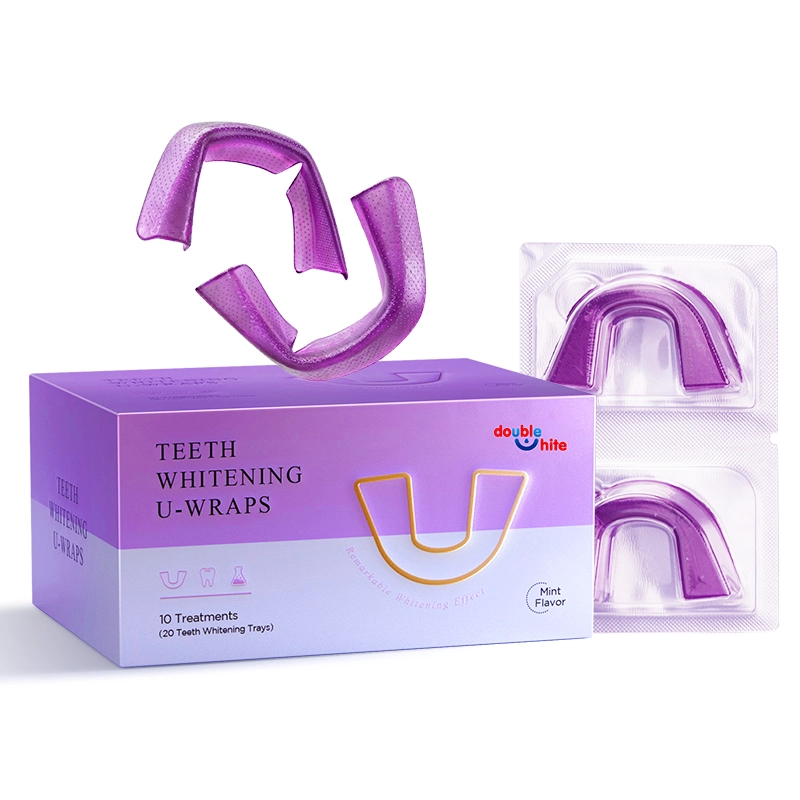
Purple Violet Teeth Whitening U-Wraps
Private label purple teeth whitening u wraps by Double White offer targeted stain removal with purple color corrector teeth whitening strips designed for effective, even whitening. These U-wraps fit comfortably and deliver consistent results for professional-grade teeth brightening.

Dissolving Teeth Whitening Strips
Double White Dissolving Teeth Whitening Strips offer an easy, mess-free way to brighten your smile. These strips dissolve quickly, delivering effective whitening results without residue. Perfect for daily use, they ensure a confident, radiant smile in minutes. Try Double White today!
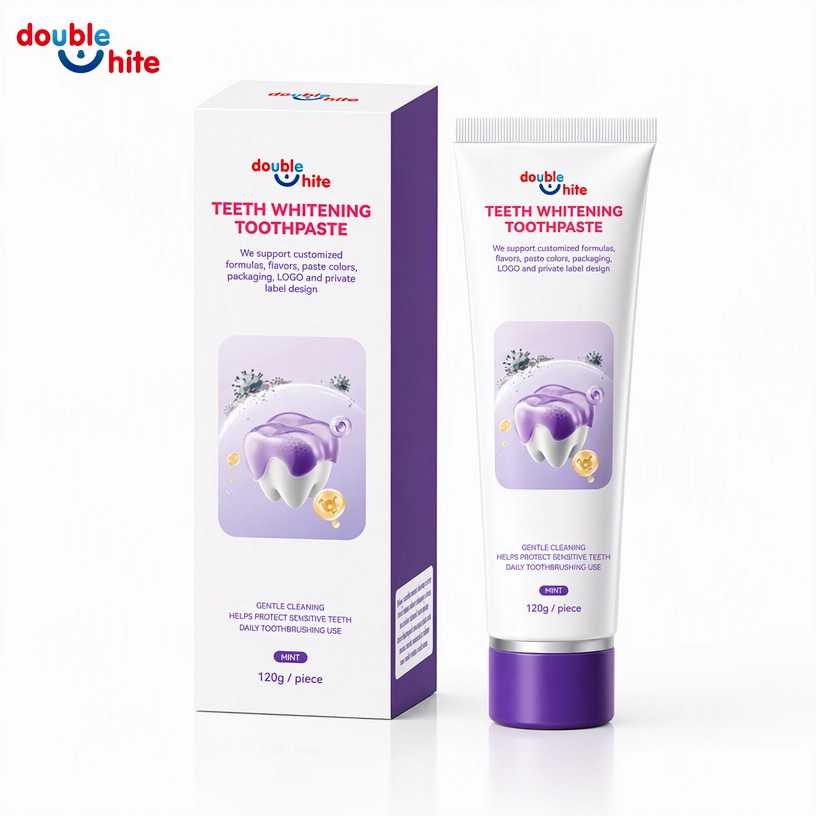
Teeth Whitening Toothpaste
Our enamel-safe whitening toothpaste removes stubborn stains without irritating exposed nerves. Formulated as an effective teeth whitening toothpaste for sensitive teeth, it strengthens enamel, prevents cavities, and brightens daily.
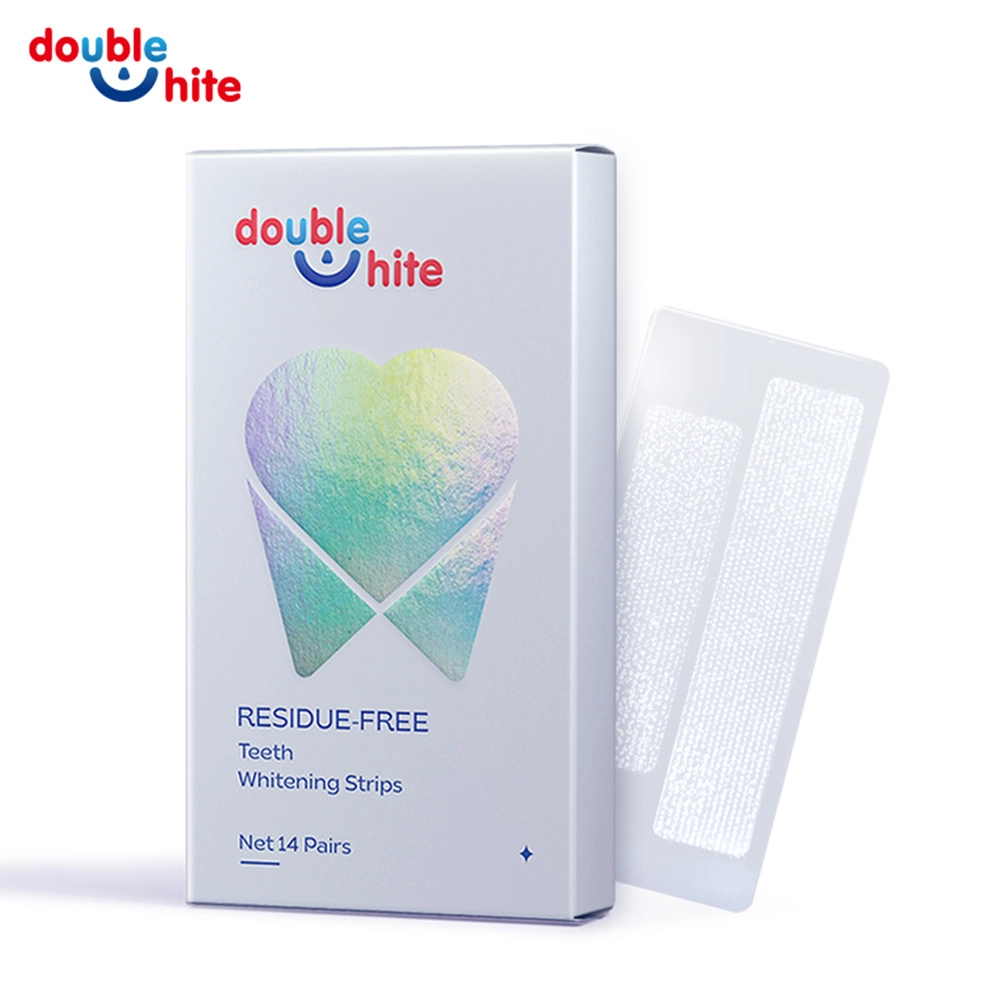
Hydrogen Peroxide Residue-Free Teeth Whitening Strips RFHP01
Hydrogen Peroxide Residue-Free Teeth Whitening Strips RFHP01 are designed for private label brands, wholesalers, salons, clinics, and e-commerce sellers seeking whitening strips with strong adhesion, clean removal, and low-residue user experience. Double White supports custom flavor, private label packaging, logo printing, sample support, and bulk production for global oral care businesses.
Send us your inquiry
Reach out to us through the form below or via the contact information provided.
Our dedicated team is committed to providing prompt and personalized responses to all your queries.
Please fill out the fields above with your full name, email address, and comment.


Copyright © 2026 Double White All Rights Reserved. Designed by gooeyun
Whatsapp: +8615920313473
cndoublewhite
Doublewhite
doublewhite
cndoublewhite
cndoublewhite
Double White