


Custom Teeth Whitening Strips Manufacturer: How to Plan Formulas, Shapes, Films, and Packaging
A practical guide to planning custom teeth whitening strips, from active-ingredient selection and strip design to packaging, compliance, quotation preparation, and supplier evaluation.

- What Should Buyers Prepare Before Ordering Custom Teeth Whitening Strips?
- The Main Customization Decisions in Teeth Whitening Strips
- How to Choose the Right Formula and Strip Format
- Customization Options Beyond the Formula
- What Determines the Cost?
- How to Get an Accurate Quote
- Common Quoting Mistakes
- Cost Reduction Strategies and DFM Advice
- How to Choose the Right Supplier for Cost Optimization
- Conclusion and Next Steps
- Send Your Drawings for a Cost Review
- Frequently Asked Questions
- References
Custom teeth whitening strips are a product-development project, not simply a logo-printing exercise. The formula, strip construction, shape, film, packaging, target market, documentation, quantity, and delivery terms all influence feasibility and cost. A clear specification helps a supplier identify technical risks and prepare a quotation that can be compared with other offers.
What Should Buyers Prepare Before Ordering Custom Teeth Whitening Strips?
Quick answer for brands and wholesale buyers
Before contacting a custom teeth whitening strips manufacturer, prepare the target countries, sales channels, preferred formula direction, strip format, shape, film appearance, flavor expectations, packaging structure, estimated quantity, artwork or drawings, documentation needs, destination, and delivery preference. The supplier should then confirm whether the proposed formula, claims, packaging, and documentation fit the intended market.
A useful first brief should answer four questions:
- What will the product contain? For example, hydrogen peroxide, sodium chlorite, PAP, or a specialized care formula.
- How will it be used? Wet gel, dry gel, no-residue, dissolvable, alcohol-free, polymer-reduced, or U-shaped.
- How will it be sold? Individual sachets, cartons, inserts, display packs, or a professional channel format.
- Where will it be sold? The destination market determines the relevance of claims, labeling, documentation, and formula review.
For a broader overview of production decisions and supplier selection, buyers can review this guide to a teeth whitening strips factory.
Why customization affects more than appearance
Changing the active ingredient can affect usage instructions, claims, safety documentation, and market suitability. Changing the strip format can affect adhesion, wear time, residue, rinsing, dissolution, and packaging protection. Changing the shape or film can affect fit, artwork layout, packing, and handling.
A statement such as “private label whitening strips for online sales” describes a business idea, but it is not yet a production-ready specification. The manufacturer still needs measurable inputs such as dimensions, pack count, packaging structure, formula direction, order quantity, and destination.
The minimum project brief
- Target countries, sales channels, intended users, and proposed product claims.
- Preferred active ingredient or formula direction.
- Strip format, expected wear experience, dimensions, and shape.
- Film color, printing requirements, flavor, and reference samples.
- Primary and secondary packaging structure.
- Estimated order quantity, units per box, and number of variants.
- Artwork, drawings, languages, labeling, and documentation requirements.
- Destination, preferred DDP or DDU terms, and customs expectations.
The Main Customization Decisions in Teeth Whitening Strips
The main decisions are connected. A formula may influence the documents and claims; the strip format may influence packaging and instructions; and the quantity may determine whether complex packaging is commercially practical.
| Decision area | Typical options | Buyer question |
|---|---|---|
| Formula direction | Hydrogen peroxide, sodium chlorite, PAP, or specialized care formula | Which direction fits the target market, intended claims, and available documentation? |
| Strip construction | Wet gel, dry gel, no-residue, dissolvable, alcohol-free, polymer-reduced | What user experience is required regarding adhesion, wear time, rinsing, and residue? |
| Shape and coverage | Standard contour, custom contour, or U-shaped format | How should the strip fit, cover the teeth, fold, and fit inside the sachet? |
| Film appearance | Standard film, printed film, or colored top film | Is the visual treatment compatible with the strip construction and artwork? |
| Packaging | Sachet, carton, insert, display pack, or combination | What does the sales channel require, and what packaging quantity is practical? |
For additional supplier questions, buyers may use this teeth whitening strips factory supplier checklist.
How to Choose the Right Formula and Strip Format
Hydrogen peroxide, sodium chlorite, or PAP
Formula selection should begin with the destination market and intended claims, not with the assumption that one ingredient is universally better. Hydrogen peroxide is a common formulation direction in North American strategies, while sodium chlorite and PAP are used in selected non-hydrogen-peroxide or market-specific approaches. The final choice requires review of concentration, labeling, safety documentation, claims, and applicable local requirements.
Research literature on dental bleaching agents can be found through the National Center for Biotechnology Information (NCBI) PubMed Central research database. A database search provides background information, but it does not establish that a particular commercial formula is suitable for a specific market or user group.
For a focused comparison of the three main formulation directions, see this guide to a hydrogen peroxide PAP and sodium chlorite teeth whitening strips manufacturer.
Regional planning considerations
Regional strategies should be treated as preliminary planning information rather than legal advice. The supplied market framework identifies hydrogen peroxide formulations as common in North America; sodium chlorite and PAP as important options for some European products; flexible use of sodium chlorite, PAP, and hydrogen peroxide in Australia; and lower-concentration hydrogen peroxide, sodium chlorite, and PAP in mainland China. Alcohol-free concepts may also be relevant for some Middle Eastern positioning.
Buyers targeting North America should review ingredient disclosure, product classification, claims, and labeling responsibilities using the U.S. Food and Drug Administration guidance on cosmetic products and regulation. The supplier should not be expected to replace the buyer’s legal or regulatory review.
Wet, dry, no-residue, and dissolvable formats
Format selection translates the formula into a user experience:
- Wet gel strips: Often associated with a longer wear routine and rinsing. Buyers should evaluate gel control, slipping, overflow, and packaging protection.
- Dry gel strips: Use drying technology to support adhesion. Sampling should assess comfort, placement, and consistency.
- No-residue strips: Designed for a shorter application with minimal or no rinsing. Usage instructions and residue claims require validation.
- Dissolvable strips: Designed to dissolve during use, with the supplied product information indicating an approximate 10–20 minute wear concept. Confirm actual performance for the selected formula.
- Alcohol-free or polymer-reduced strips: May support specific sensory, ingredient, vegan-oriented, or market-positioning requirements, but claims require formula evidence.
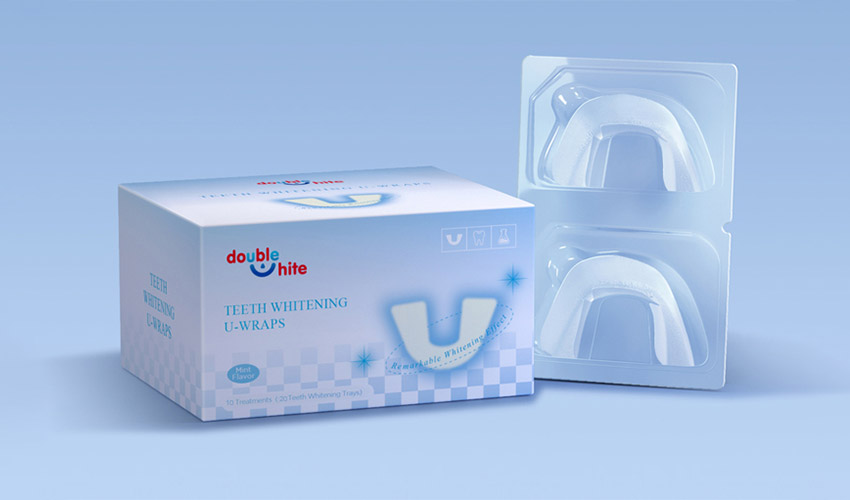
- U-shaped strips: Focus on coverage and fit, including front-and-back contact concepts. The shape may affect folding, packing, and instructions.
Hydroxyapatite remineralization strips and hyaluronic-acid gum-protection strips should be treated as specialized care products, not interchangeable whitening products. Their ingredients, claims, and labeling require a separate review.
Customization Options Beyond the Formula
Shape and coverage
Shape affects coverage, fit, handling, artwork layout, and packaging dimensions. A custom contour may improve the intended application but can also require changes to the film layout or sachet. Provide dimensions, a drawing, or a physical reference rather than relying only on descriptive terms such as “larger” or “premium.”
Film appearance and colored top films
Colored top films are a visual specification, not evidence of whitening performance. Purple, blue, pink, and black film options are listed in the product information, subject to confirmation for the selected construction. Buyers should approve the shade, print coverage, color stability, and compatibility with the formula before final artwork approval.
Flavor and sensory experience
Specify flavor direction and intensity, or state that no flavor is required. Flavor changes can affect mouthfeel, residue, alcohol-free positioning, and sample approval. Avoid adding multiple flavor variants unless the sales channel justifies the additional artwork, packaging, inventory, and production complexity.
Packaging structure
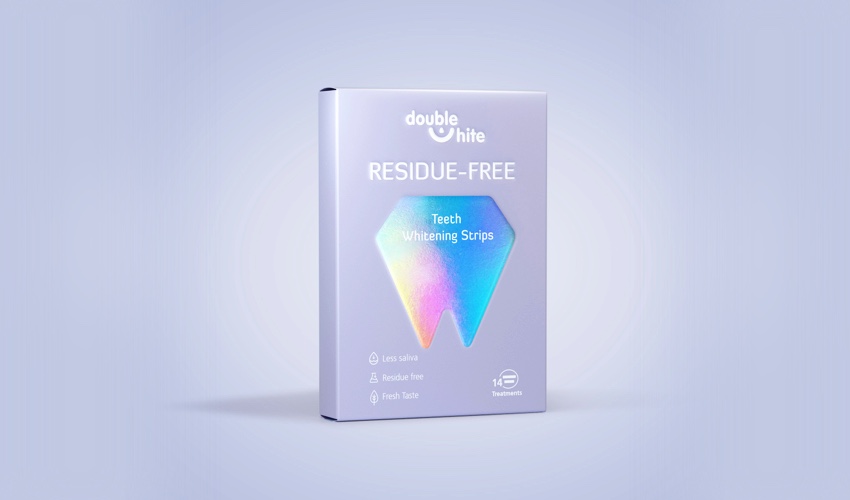
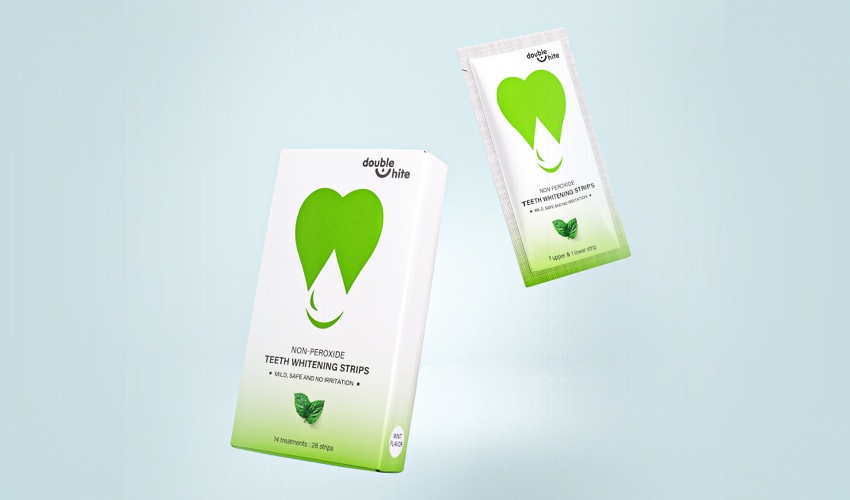
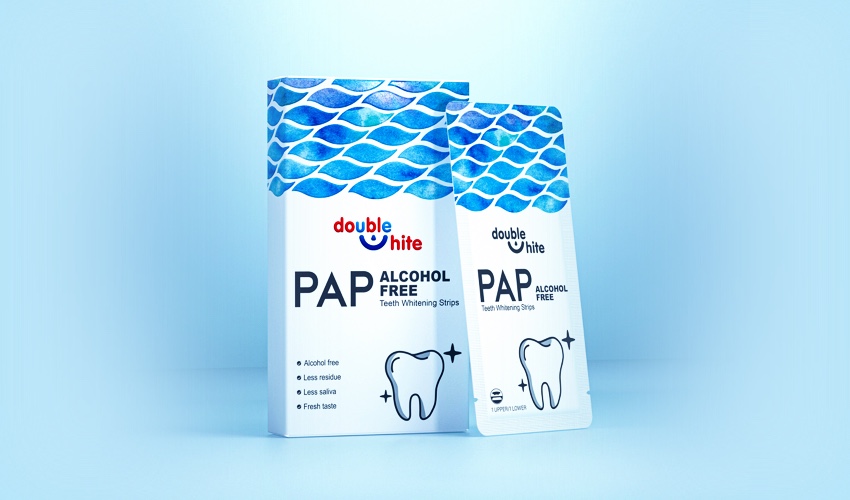
Packaging may include individual sachets, cartons, inserts, display packs, or combinations of these. The structure affects material consumption, print areas, pack dimensions, shipping volume, labeling space, and packing operations. Packaging drawings should show dimensions, folds, seal areas, print panels, and units per pack.
What Determines the Cost?
There is no reliable universal unit price for custom whitening strips because the quotation depends on the confirmed formula, construction, quantity, packaging, destination, and documentation scope. Fixed preparation work is usually more significant when an order contains a small quantity, several variants, or highly customized packaging.
The main cost drivers are:
- Formula: Active ingredient, formula direction, flavor, documentation, and validation requirements.
- Strip construction: Wet, dry, no-residue, dissolvable, polymer-reduced, or U-shaped format.
- Shape and dimensions: Material use, layout, fit, packing method, and production feasibility.
- Film and print: Film material, color, print coverage, artwork preparation, and appearance approval.
- Packaging: Sachet, carton, insert, display pack, finish, dimensions, and packing configuration.
- Quantity and variants: Total boxes, units per box, packaging quantity, and number of artworks.
- Logistics: Destination, shipment volume, DDP or DDU structure, customs, and taxes.
Cost impact table
| Project variable | Relative cost impact | Reason |
|---|---|---|
| Existing formula and standard strip format | Lower | Fewer formulation, sampling, and validation changes may be required. |
| New formula direction or market-specific formula | Higher | More review, documentation, sampling, and claims alignment may be needed. |
| Custom shape or U-shaped construction | Medium to higher | Dimensions, coverage, artwork, handling, and packing feasibility must be reviewed. |
| Colored top film or extensive film printing | Medium | Film, print coverage, artwork preparation, and appearance approval add requirements. |
| Standard sachet and carton | Lower to medium | Fewer components generally simplify sourcing, printing, packing, and transport. |
| Display packaging, inserts, or several variants | Higher | Additional components, artwork versions, packing operations, and inventory coordination are involved. |
| DDP delivery or complex destination requirements | Medium to higher | Freight, customs, taxes, and destination responsibilities must be included. |
This table is a comparison framework, not a price list. The supplier should identify which items are included, excluded, estimated, or still subject to confirmation.
How to Get an Accurate Quote
Send enough information for the supplier to price the same product that the buyer intends to launch. A useful RFQ should include:
| Information to send | What to specify |
|---|---|
| Product brief | Target market, sales channel, user group, claims, formula direction, and intended launch quantity. |
| Technical inputs | Strip dimensions, shape, format, wear expectations, film color, flavor, and reference product. |
| Drawings and artwork | Strip drawing, sachet and carton dielines, print panels, languages, warnings, and file format. |
| Packaging | Material, finish, units per box, inserts, display requirements, and transport considerations. |
| Quality expectations | Appearance, fit, adhesion, residue, dissolution, sealing, labeling, and finished-product checks to be discussed. |
| Commercial scope | Quantity, number of variants, packaging quantity, destination, DDP or DDU preference, and customs responsibility. |
Ask the supplier to return a quotation that states assumptions, exclusions, MOQ, sampling requirements, artwork responsibilities, documentation scope, delivery term, and any unresolved technical questions.
Common Quoting Mistakes
- Requesting a price without identifying the target country.
- Comparing quotes with different units per box, packaging components, or delivery terms.
- Using “premium packaging” without defining material, dimensions, finish, or display function.
- Sending incomplete artwork that omits ingredients, warnings, languages, or required product information.
- Changing the formula, flavor, shape, or film after sample approval without requesting a revised review.
- Assuming a facility certificate proves that the exact formula and finished product meet every market requirement.
- Requesting dropshipping or overseas warehousing without confirming that the supplier supports those services.
Cost Reduction Strategies and DFM Advice
Design-for-manufacturing review should take place before final artwork and production release. The objective is not to remove useful product features; it is to prevent avoidable rework and unnecessary component complexity.
- Use standard strip dimensions when they satisfy the coverage and user requirements.
- Limit the number of film colors, flavors, packaging versions, and display components during the first launch.
- Confirm the formula and strip construction before printing packaging.
- Check that the strip shape fits the sachet and that the sachet fits the carton or display pack.
- Define critical dimensions, fit expectations, and acceptable tolerances with the supplier before mass production.
- Request an essential-packaging quotation and a separately priced premium-packaging option.
- Compare DDP and DDU on the same destination and clarify who handles customs, taxes, and import clearance.
Incomplete drawings are a common source of cost uncertainty. A drawing should show dimensions, orientation, folds, seal areas, print boundaries, and units per pack wherever relevant. Surface finish and print treatment should also be described rather than left to interpretation.
How to Choose the Right Supplier for Cost Optimization
The lowest unit price is not necessarily the lowest project cost. Evaluate whether the supplier can connect formula, strip construction, film, packaging, documentation, and logistics into one confirmed specification.
Supplier evaluation criteria
- Formula fit: Can the supplier discuss hydrogen peroxide, sodium chlorite, PAP, and the required market documentation without treating them as interchangeable?
- Engineering review: Can the supplier review drawings, dimensions, shape, film, sachet fit, carton layout, and packaging quantities?
- Order fit: Does the stated MOQ match the buyer’s quantity and number of variants?
- Documentation: Do the ingredient, safety, certification, and product documents apply to the exact formula, facility, market, and SKU?
- Quality scope: Are incoming materials, in-process production, finished goods, packaging, and shipment release responsibilities defined?
- Logistics: Are DDP or DDU terms, customs responsibilities, overseas warehousing, and dropshipping clearly stated?
- Commercial transparency: Does the quotation separate included costs, exclusions, assumptions, and items requiring later confirmation?
The supplied information for Double White Medical Technology Development (Guangzhou) Co. LTD states that it has operated since 1999, uses a 30,000-square-meter Class 100,000 cleanroom facility, employs more than 300 people, and has eight automated production lines. It also lists a daily strip capacity of up to 320,000 pairs and a reference MOQ of 1,000 boxes for customized packaging and formulation orders. Buyers should confirm the current applicability of these figures to the exact SKU, packaging configuration, and order.
The listed factory-level and product-level certifications should likewise be checked for scope and validity before they are used in a market submission. ISO’s cosmetics standards information can help buyers understand the role of quality systems and good manufacturing practice, but a certification alone does not establish product-specific compliance. Review the International Organization for Standardization cosmetics standards resource alongside the exact supplier documentation.
Conclusion and Next Steps
A successful custom whitening strip project aligns the market, formula, strip format, shape, film, packaging, quantity, documentation, and delivery term before production is released. Buyers should compare quotations only after confirming that suppliers are pricing the same specification and should approve a written formula, drawing, artwork, packaging configuration, and quality scope.
The next practical step is to prepare a concise RFQ containing the target market, formula direction, drawings, packaging requirements, quantity, documentation needs, destination, and delivery preference. The supplier’s response should identify feasibility questions, quotation assumptions, exclusions, and cost-sensitive design choices.
Send Your Drawings for a Cost Review
Send your 2D or 3D drawings, formula expectations, film and packaging materials, surface or print finish requirements, quantity, packaging configuration, destination, and delivery preference. A complete brief allows the supplier to review manufacturability and explain which items are included, excluded, or still require confirmation.
Frequently Asked Questions
References
Purple Violet Teeth Whitening U-Wraps for Private Label & Wholesale
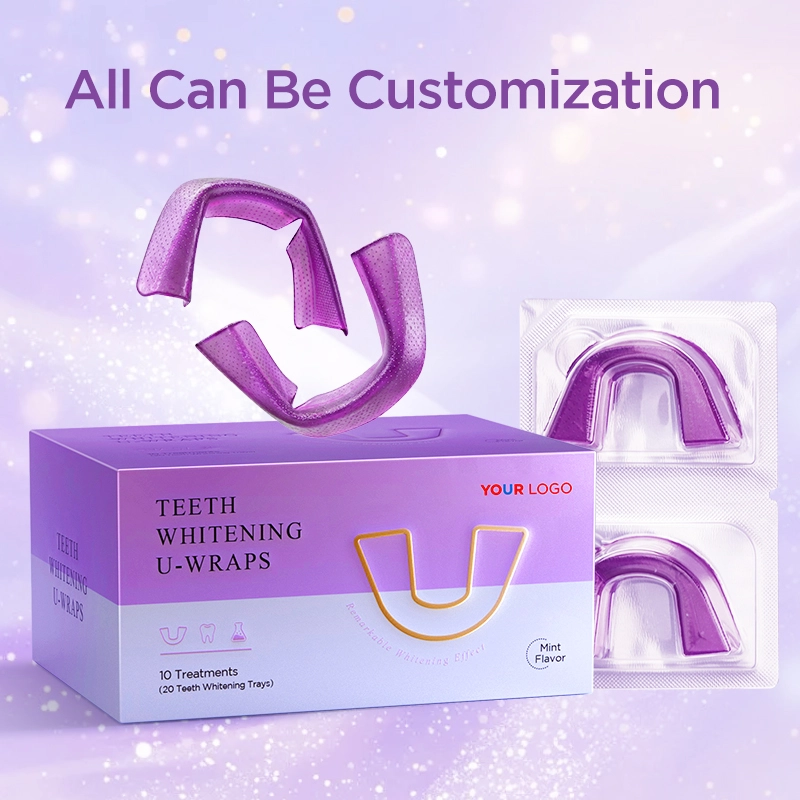
Purple Teeth Whitening U-Wraps: Private Label Sourcing Guide for Brands
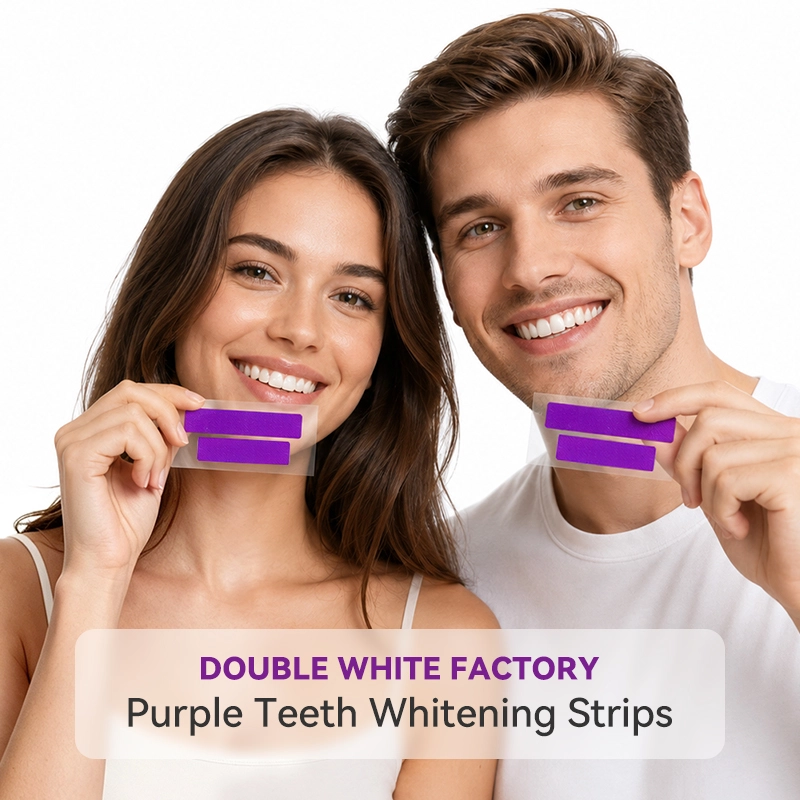
How Do Purple Teeth Whitening Strips Work? A Color-Correction Guide for Private Label Buyers

Whitening Pen Applicator & Dispensing Guide: What Buyers Should Check Before Bulk Production
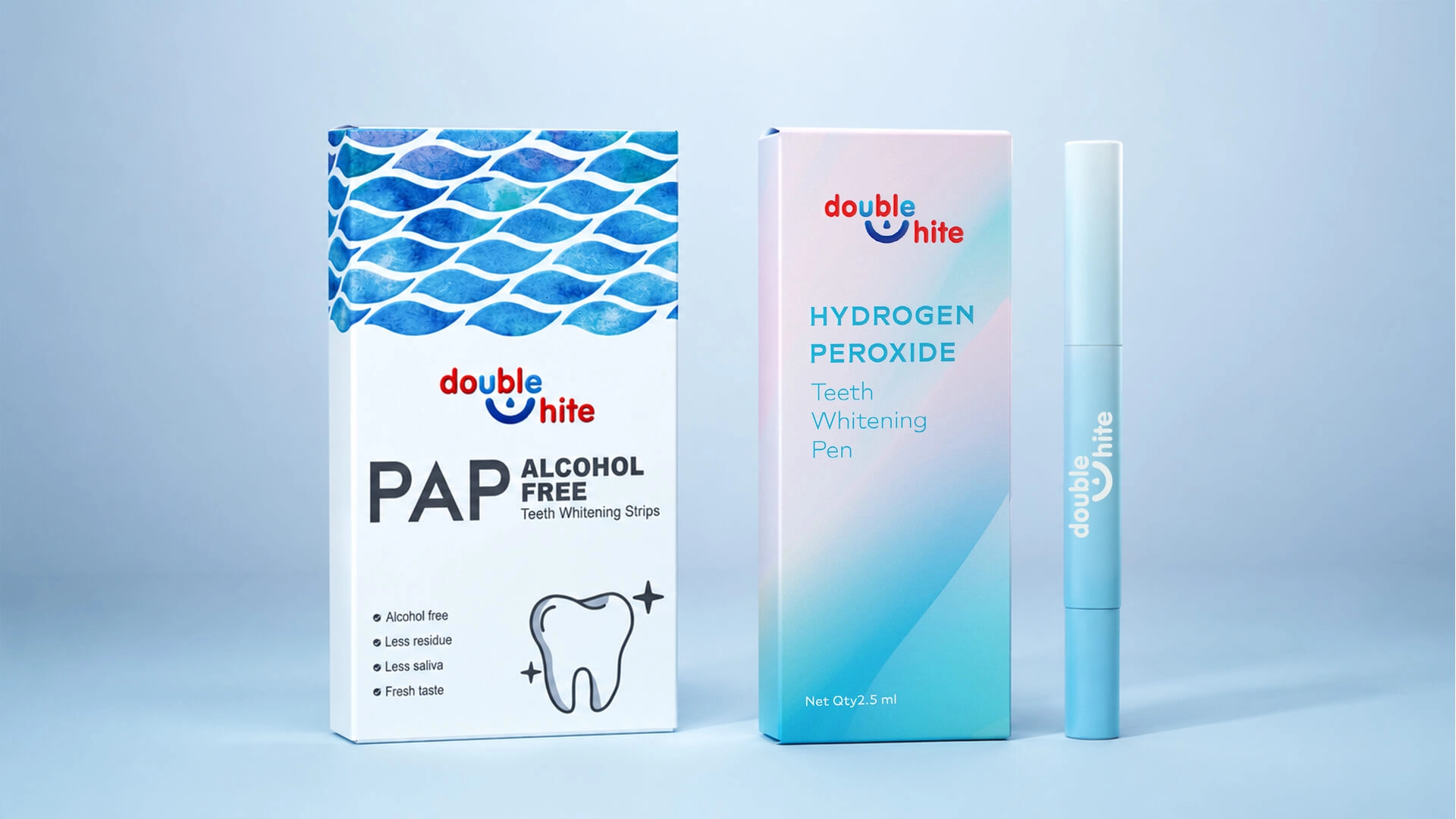
Whitening Pen Formula Stability: What Buyers Should Test Before Bulk Production
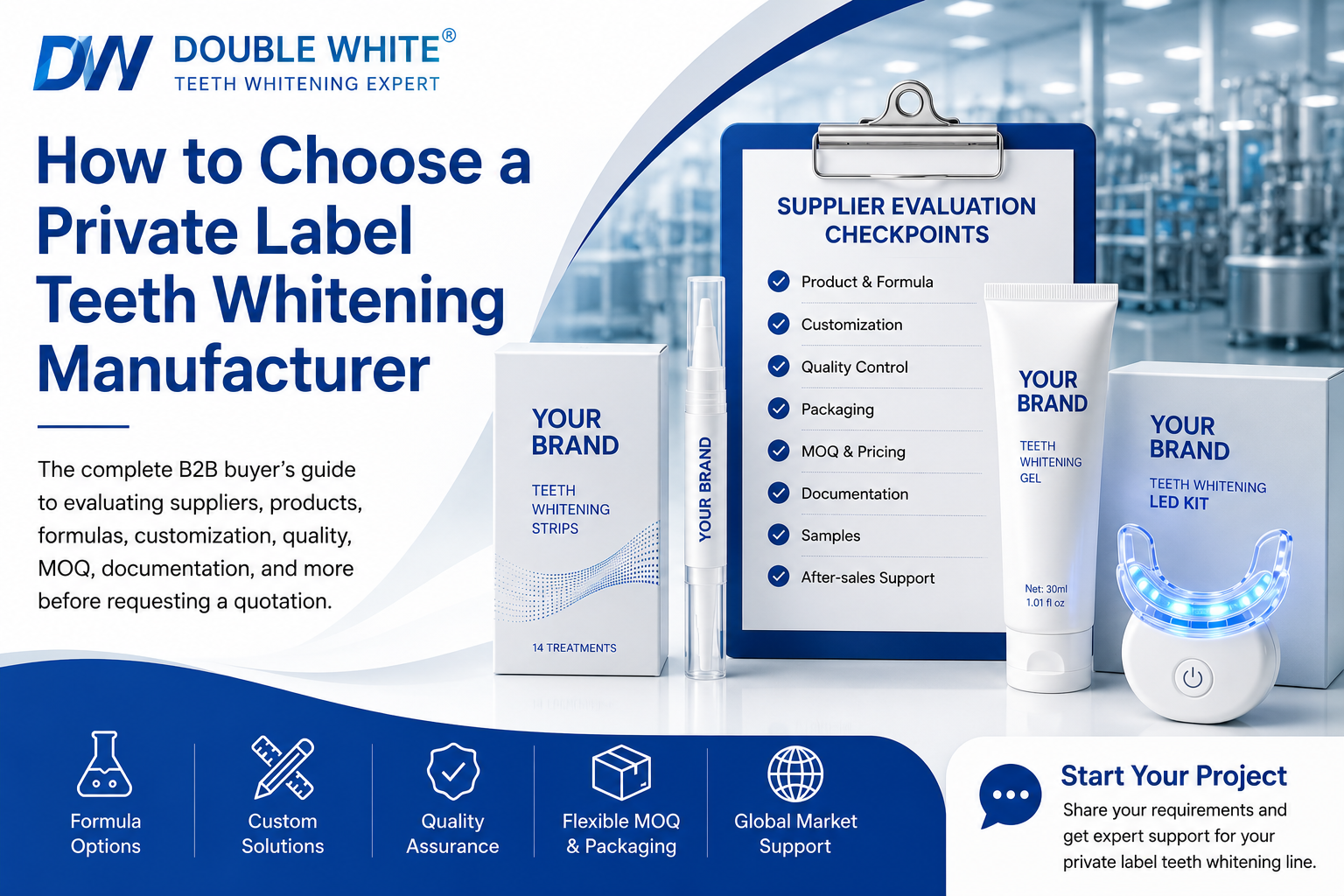
How to Choose a Private Label Teeth Whitening Manufacturer
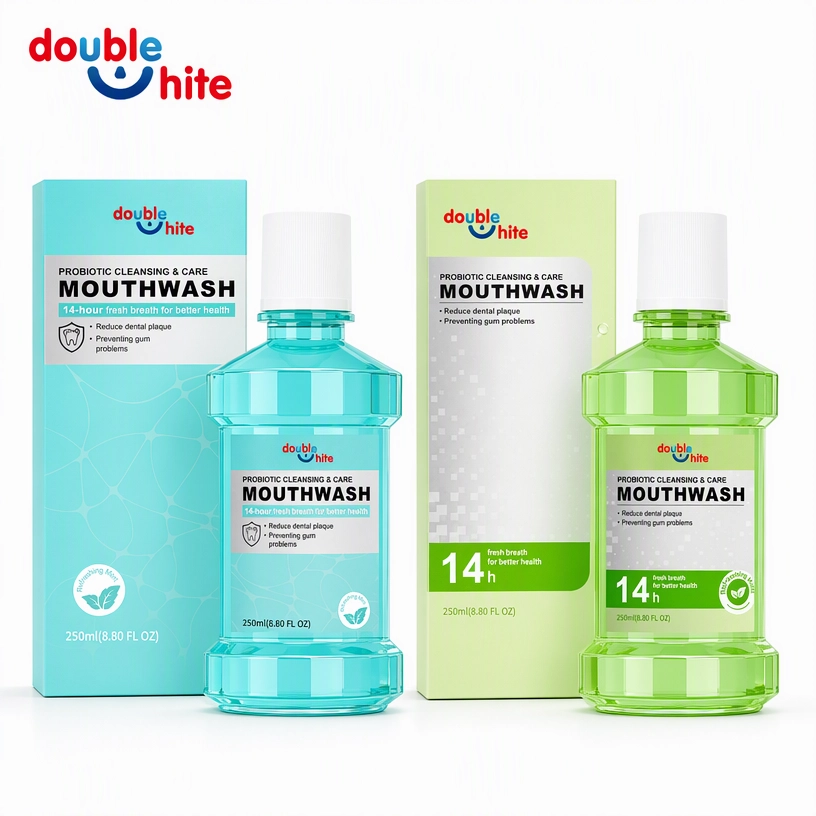
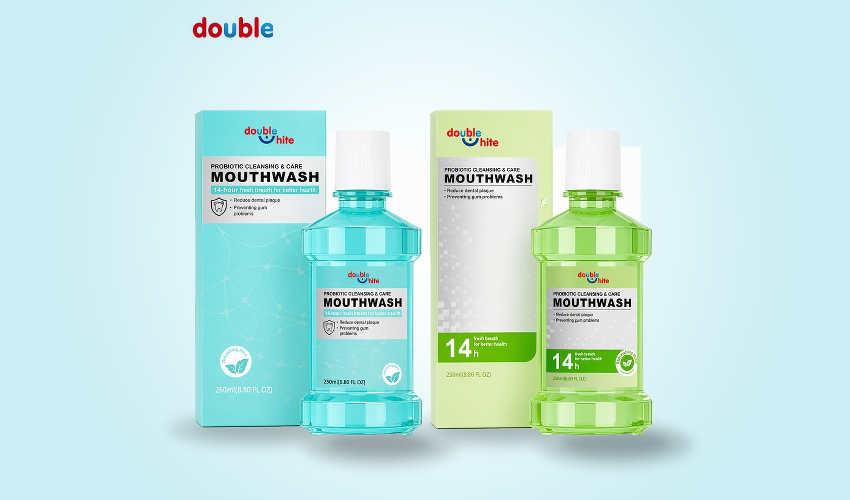
Mouthwash
Engineered for daily oral care, this dual-action formula functions as a proven mouthwash for bad breath and an enamel-safe teeth whitening mouthwash. Lab-tested for quality, it actively neutralizes odor compounds and lifts surface stains without harsh abrasives.

Hydrogen Peroxide Teeth Whitening Gel Strips for OEM & Private Label Brands
Double White's hydrogen peroxide teeth whitening gel strips are designed for brands, wholesalers, and e-commerce sellers looking for a reliable, cost-effective entry-level whitening strip. With a double elastic gel formula, controlled HP concentration, and private label packaging support, this product is suited for supermarket retail, salon use, and online channel distribution across global markets.
Double White's hydrogen peroxide teeth whitening gel strips are designed for brands, wholesalers, and e-commerce sellers looking for a reliable, cost-effective entry-level whitening strip. With a double elastic gel formula, controlled HP concentration, and private label packaging support, this product is suited for supermarket retail, salon use, and online channel distribution across global markets.

Dissolving Teeth Whitening Strips
Double White Dissolving Teeth Whitening Strips offer an easy, mess-free way to brighten your smile. These strips dissolve quickly, delivering effective whitening results without residue. Perfect for daily use, they ensure a confident, radiant smile in minutes. Try Double White today!

Violet Purple Teeth Whitening Strips
Violet Purple Teeth Whitening Strips for color-correcting product concepts and private label packaging. The product record lists hydrogen peroxide, but exact formulation and violet-pigment product mechanism require verification before confirming category assignment or whitening claims.
Send us your inquiry
Reach out to us through the form below or via the contact information provided.
Our dedicated team is committed to providing prompt and personalized responses to all your queries.
Please fill out the fields above with your full name, email address, and comment.


Copyright © 2026 Double White All Rights Reserved. Designed by gooeyun
Whatsapp: +8615920313473
cndoublewhite
Doublewhite
doublewhite
cndoublewhite
cndoublewhite
Double White